 CULTURETECHLENS
Jack Hill
VERIFIED evidence grade of this record
CULTURETECHLENS · “Culture, Clearly Seen.” · Black Cultural Intelligence
Research record
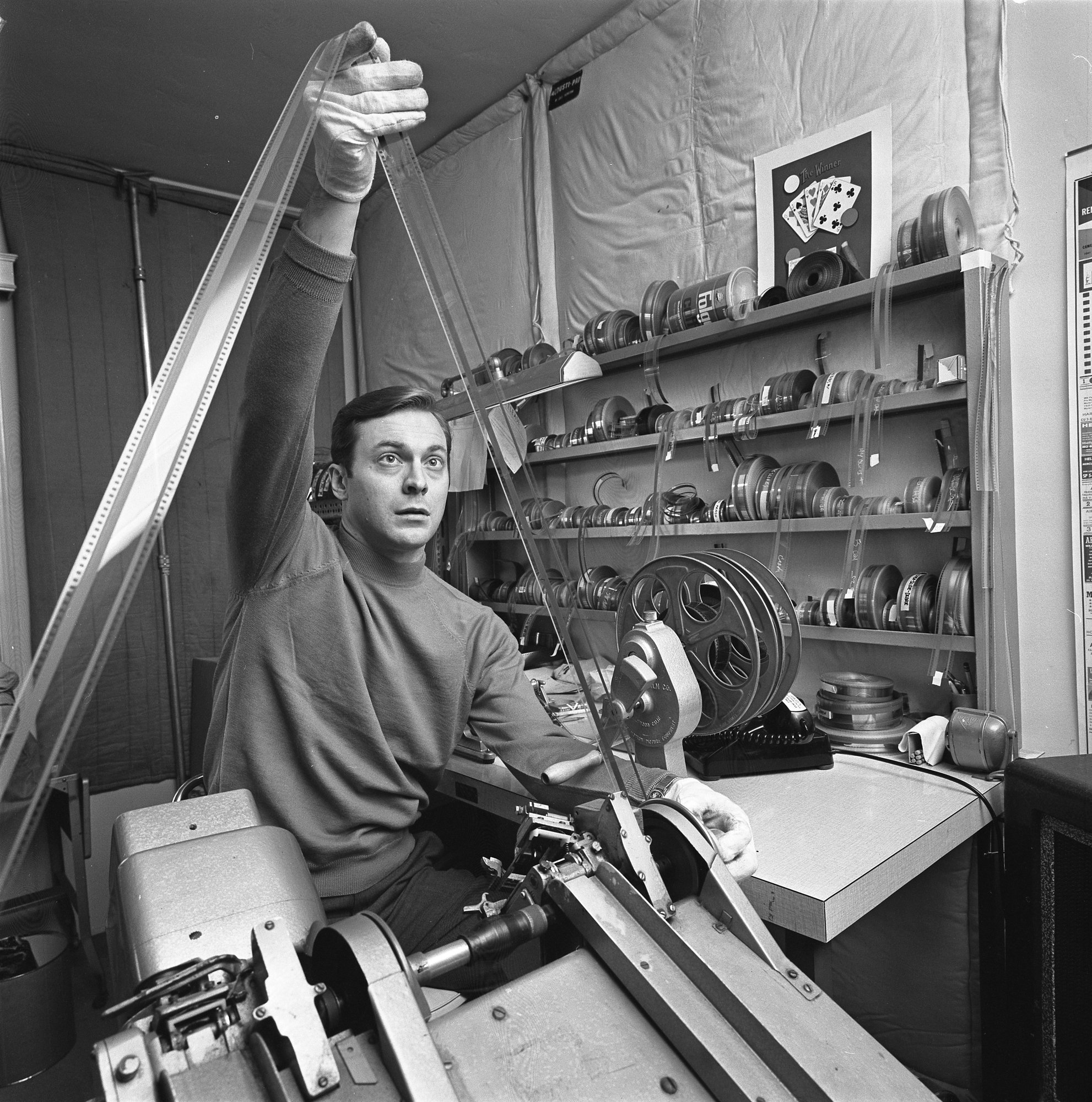
Photograph by the Los Angeles Times, CC BY 4.0, via Wikimedia Commons. Source: CultureTechLens
Rights basis: CC BY 4.0
Jack Hill is the director the American Film Institute's catalog ties to this graph at a single, sufficient point: he wrote and directed Foxy Brown, released in 1974 — the AFI entry is the verification source for this record, and it documents the film as the second of his two defining collaborations with Pam Grier. Hill was born on January 28, 1933, in Los Angeles, studied at UCLA, and entered the film industry in the orbit of Roger Corman and Francis Ford Coppola, the low-budget apprenticeship system that trained a generation of American directors. His active directing career ran from about 1960 to 1982, almost entirely in exploitation genres — horror, women-in-prison films, action — made fast and cheap for drive-in and grindhouse distribution.
The filmography is the biography. His early features include Spider Baby (1967), a horror film that became a cult object, and Pit Stop (1969), a stock-car picture the reference record singles out for its raw energy. For American International Pictures he directed The Big Doll House (1971), a women-in-prison film that established the template — and the cast — for his best-known work: it starred Pam Grier in an early role, alongside Sid Haig, who became a Hill regular. Then came the two films on which his standing rests. Coffy (1973), also written and directed by Hill, cast Grier as a nurse who turns vigilante against the drug dealers who hooked her sister; the UCLA Film & Television Archive's program notes for the film call Grier's lead a watershed — one of the first films to feature a strong, independent female protagonist in a leading action role — and document the production in detail, from Roy Ayers's score to AIP's use of focus groups in shaping the picture. Foxy Brown (1974) followed the same star and director into the role the AFI record carries: Grier as Foxy Brown, avenging her murdered boyfriend against a drug syndicate. Switchblade Sisters (1975) closed the run.
Hill's afterlife is a critical one. Quentin Tarantino — who revived Grier in Jackie Brown and filled his films with Hill's casts — called him "the Howard Hawks of exploitation filmmaking," a judgment the reference record preserves, and the archive screenings of Coffy and Foxy Brown at institutions like UCLA mark the films' passage from grindhouse programming into film-historical canon. He is also credited, across his AIP pictures, with developing the performers he worked with — Grier above all, but also Haig and, in early roles, Ellen Burstyn.
In the CultureTechLens graph, Hill's two edges run from the two film records: Foxy Brown and Coffy are each carried as works authored by him — the graph's authorship convention for the writer-director — which is why this record's degree is two and why the entry has been built on those two films and the documented career around them. CultureTechLens carries Jack Hill as a person record on the AFI's authority for Foxy Brown and the archive record for Coffy: a Los Angeles-born UCLA graduate who spent twenty years making exploitation pictures and, in two of them, built the screen persona — Grier's — that made the genre historically important. The UCLA archive notes fill out Coffy's working surface: its cast joined Grier to Booker Bradshaw, Robert DoQui, and Sid Haig, and its score was Roy Ayers's — the vibraphonist's funk soundtrack becoming as durable an artifact as the film. That density of talent on an exploitation budget is the real explanation of Hill's reputation. The Corman-AIP system he was trained in treated genre pictures as disposable, but Hill stocked his with actors and musicians whose later careers — Grier's above all — carried his frames into the permanent record, which is why an archive program, and not only a repertory cinema, now holds his two Grier films as the pair of work records through which the graph knows him.
Sources for this record
- Foxy Brown — Catalog of Feature Films — American Film Institute (AFI Catalog)
Claims supported: Master verification source: Jack Hill wrote and directed Foxy Brown (1974). - Jack Hill — Wikipedia
Claims supported: Born January 28, 1933, in Los Angeles; UCLA; early associate of Francis Ford Coppola and Roger Corman; AIP films; Spider Baby (1967), Pit Stop (1969), The Big Doll House (1971), Coffy (1973), Foxy Brown (1974), Switchblade Sisters (1975); cultivated Pam Grier, Sid Haig and Ellen Burstyn; Quentin Tarantino's description 'the Howard Hawks of exploitation filmmaking'; active 1960–1982. - Foxy Brown / Coffy — Archive Screening Notes — UCLA Film & Television Archive
Claims supported: Coffy cast including Booker Bradshaw, Robert DoQui and Sid Haig; music by Roy Ayers; AIP focus-group context; Grier's Coffy as a watershed female action lead.
Citations
Wikipedia. "Jack Hill." Accessed October 25, 2026. https://en.wikipedia.org/wiki/Jack_Hill.
UCLA Film & Television Archive. "Foxy Brown / Coffy." Accessed October 25, 2026. https://cinema.ucla.edu/events/foxy-brown-coffy-08-14-17/.
Published October 25, 2026, from the head-verified staged record in the Entity Depth Program (Batches 004–008). Source: CultureTechLens
More person records
Browse the full directory: all entity records
Record CTL-E-5615 · CultureTechLens Knowledge Graph · evidence grade: VERIFIED · 3 sources · first published October 25, 2026, from the head-verified Entity Depth staged record CTL-P-1217 (canonical master ID — canonical merge pending the founder’s classification sitting).
Directory: all entity records · the knowledge graph
Cite this record
Chicago: CultureTechLens. “Jack Hill (CTL-E-5615).” CultureTechLens Knowledge Graph. Chicago, IL: CultureTechLens, 2026. https://culturetechlens.com/graph/entities/ctl-e-5615/
APA: CultureTechLens. (2026). Jack Hill (CTL-E-5615) [Entity record]. CultureTechLens Knowledge Graph. https://culturetechlens.com/graph/entities/ctl-e-5615/
MLA: CultureTechLens. “Jack Hill (CTL-E-5615).” CultureTechLens Knowledge Graph, 2026, https://culturetechlens.com/graph/entities/ctl-e-5615/
Citation guidance for teachers, journalists, and funders: How to Cite Us.
From the Archive
The archive in pictures
The people, places, and institutions this work documents. Photographs from the CultureTechLens research record — rights-cleared, credited, and cited like everything else here.

Trust & evidence
Evidence before authority. CultureTechLens publishes its methods, its limits, and its corrections alongside its findings. Claims carry grades — VERIFIED, SUPPORTED, PROVISIONAL, DISPUTED, UNRESOLVED — and unknowns are never reported as zero.
Every claim graded. Every source named. Every correction public — see the corrections log.