 CULTURETECHLENS
James Van Der Zee
VERIFIED evidence grade of this record
CULTURETECHLENS · “Culture, Clearly Seen.” · Black Cultural Intelligence
Research record
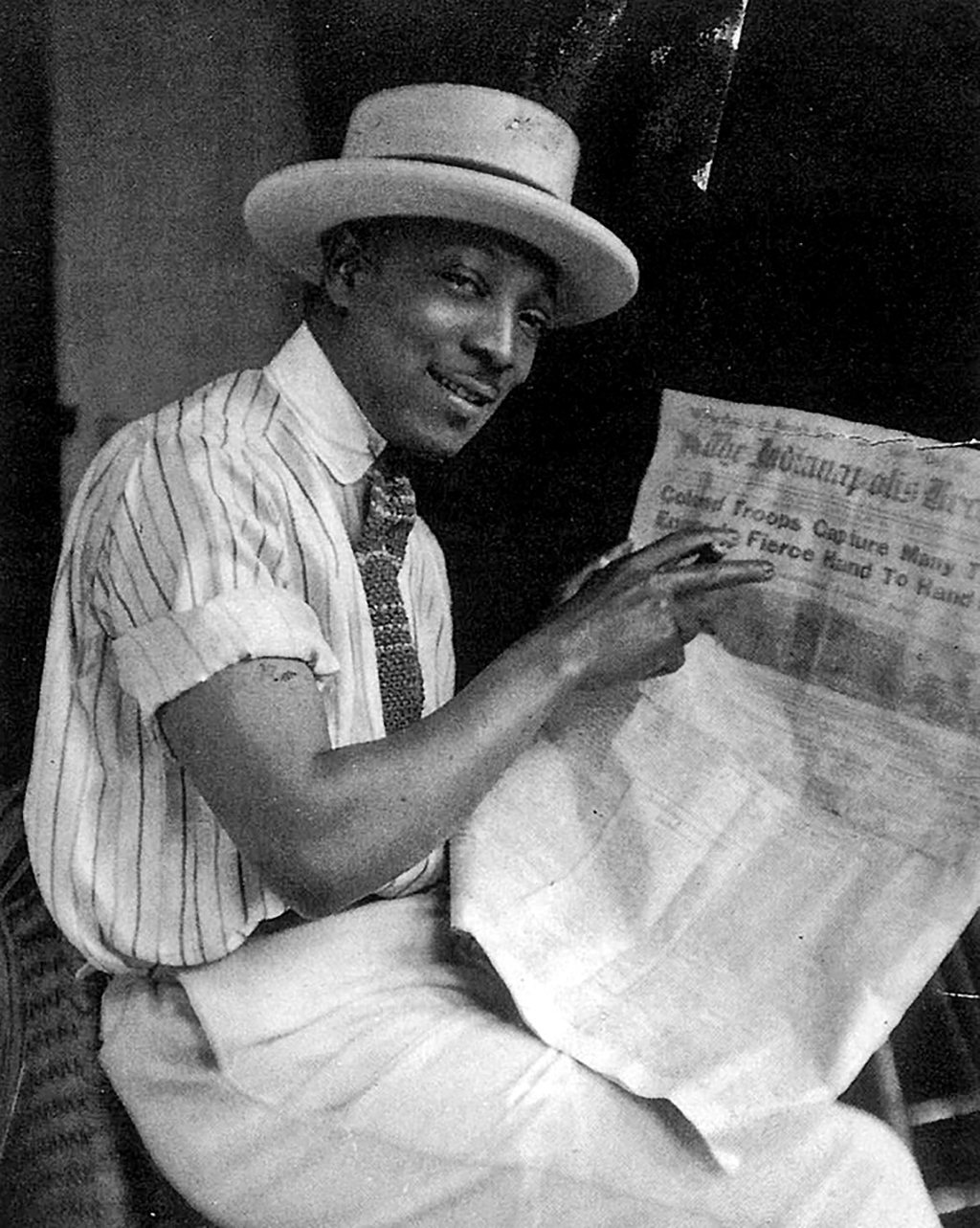
Photograph by James Van Der Zee, public domain, via Wikimedia Commons. Source: CultureTechLens
Rights basis: Public domain
James Van Der Zee spent forty years making the portrait archive of Harlem, and the Smithsonian American Art Museum's artist record — the source that verifies this entry — describes the practice in a single paragraph: a portrait photographer whose first studio stood on West 135th Street, opened in 1916, who for forty years chronicled the life of his community in portraits of schoolchildren, church groups, wedding couples, Marcus Garvey's parades, and the funeral of Florence Mills. He was born in 1886 in Lenox, Massachusetts, and died in 1983; the Museum of Modern Art's artist record adds the working geography, that his Guarantee Photo Studio at 109 West 135th Street, opened in 1917 between the 135th Street library branch — now the Schomburg Center — and the headquarters of Garvey's Universal Negro Improvement Association, put him at the exact center of the neighborhood he photographed, and that in the summer of 1924 he served as the UNIA's official photographer.
The life that led there is documented in the museum record. As a teenager in Lenox he won a camera selling sachets door to door; he learned photography working as a darkroom man at a department store in Newark around 1909; and in Harlem he built the era's defining society-portrait practice, staging his sitters against painted backdrops and props with a care that made the sitting itself an occasion. His subject list, as MoMA gives it, is Harlem's roll of honor: Bill "Bojangles" Robinson, Countee Cullen, Daddy Grace, Adam Clayton Powell Sr. and Jr., Jack Johnson, Joe Louis, Marcus Garvey. But the archive's center is not celebrity — it is the schoolchildren, church groups, and wedding couples of the Smithsonian's summary, thousands of ordinary Harlem residents who commissioned portraits and were photographed with the same formality royalty received elsewhere. Van Der Zee retired in 1969, the year the Metropolitan Museum's exhibition Harlem on My Mind brought his work to the attention of the art world, and he resumed photography in his last years; he died in 1983, and Toni Morrison is quoted in the museum record on what his pictures hold.
In the CultureTechLens graph, Van Der Zee's two edges link him to Once Upon a Time in Harlem as a filmed party guest of 1972 — he was eighty-six at that filming, three years after the Met exhibition made him famous a second time — and to the Harlem Renaissance Reunion Party event record of the same year; both links are stated here as graph links. His record needs no borrowed significance: the graph's own photo program exists in his lineage. A Black photographer building a cited, captioned archive of his own community's faces, on 135th Street, for forty years, is precisely the institutional gesture CultureTechLens repeats with its Cited Photo Archive — and Van Der Zee's portraits, held by the Smithsonian and the Met, remain the standard archive of Harlem Renaissance life against which every later one is measured. The studio practice behind those portraits is worth stating in the terms the museum records support. Van Der Zee's Guarantee Photo Studio sold ceremony: painted backdrops, elegant props, careful posing, and finishing that presented each sitter at their most formal — which is why the archive reads, across forty years, as a neighborhood's official portrait of itself rather than a candid street record. His commissions ran from the UNIA's parades — he was the movement's official photographer in the summer of 1924, with Garvey's headquarters steps from his studio door — to the funeral of Florence Mills, the beloved entertainer whose 1927 Harlem funeral drew thousands, to the steady trade of weddings, graduations, and church groups. A teenager's prize camera, won selling sachet packets in Lenox, became, by that practice, the instrument that fixed how the Harlem Renaissance saw itself; Evening Attire, among his best-known works in the Smithsonian's account, shows the method at its height — the photographer and his wife presented with the full upholstered confidence his clients came to 135th Street to buy.
Sources for this record
- James VanDerZee — Smithsonian American Art Museum
Claims supported: Master verification source: portrait photographer; first studio on West 135th Street, Harlem, opened 1916; for 40 years chronicled Harlem life — schoolchildren, church groups, wedding couples, Garvey parades, Florence Mills's funeral; the Metropolitan Museum's Harlem on My Mind (1969) brought art-world attention. - James Van Der Zee — Museum of Modern Art
Claims supported: Born 1886 in Lenox, Massachusetts; died 1983; Guarantee Photo Studio at 109 135th Street opened 1917, between the New York Public Library branch (now the Schomburg Center) and UNIA headquarters; official UNIA photographer, summer 1924; subjects including Bill 'Bojangles' Robinson, Countee Cullen, Daddy Grace, Adam Clayton Powell Sr. and Jr., Jack Johnson, Joe Louis and Marcus Garvey; Toni Morrison quotation. - James VanDerZee — Biography — Smithsonian American Art Museum
Claims supported: Won an $8 camera as a teenager selling sachets; worked as a darkroom man c. 1909; retired in 1969 and resumed photography three years before his death; Evening Attire among his best-known works.
Citations
Museum of Modern Art. "James Van Der Zee." Accessed October 25, 2026. https://moma.org/collection/artists/6074.
Smithsonian American Art Museum. "James VanDerZee — Biography." Accessed October 25, 2026. http://americanart.si.edu/collections/search/artist/?id=6593.
Published October 25, 2026, from the head-verified staged record in the Entity Depth Program (Batches 004–008). Source: CultureTechLens
More person records
Browse the full directory: all entity records
Record CTL-E-5616 · CultureTechLens Knowledge Graph · evidence grade: VERIFIED · 3 sources · first published October 25, 2026, from the head-verified Entity Depth staged record CTL-P-1385 (canonical master ID — canonical merge pending the founder’s classification sitting).
Directory: all entity records · the knowledge graph
Cite this record
Chicago: CultureTechLens. “James Van Der Zee (CTL-E-5616).” CultureTechLens Knowledge Graph. Chicago, IL: CultureTechLens, 2026. https://culturetechlens.com/graph/entities/ctl-e-5616/
APA: CultureTechLens. (2026). James Van Der Zee (CTL-E-5616) [Entity record]. CultureTechLens Knowledge Graph. https://culturetechlens.com/graph/entities/ctl-e-5616/
MLA: CultureTechLens. “James Van Der Zee (CTL-E-5616).” CultureTechLens Knowledge Graph, 2026, https://culturetechlens.com/graph/entities/ctl-e-5616/
Citation guidance for teachers, journalists, and funders: How to Cite Us.
From the Archive
The archive in pictures
The people, places, and institutions this work documents. Photographs from the CultureTechLens research record — rights-cleared, credited, and cited like everything else here.



Trust & evidence
Evidence before authority. CultureTechLens publishes its methods, its limits, and its corrections alongside its findings. Claims carry grades — VERIFIED, SUPPORTED, PROVISIONAL, DISPUTED, UNRESOLVED — and unknowns are never reported as zero.
Every claim graded. Every source named. Every correction public — see the corrections log.