 CULTURETECHLENS
John Singleton
VERIFIED evidence grade of this record
CULTURETECHLENS · “Culture, Clearly Seen.” · Black Cultural Intelligence
Research record
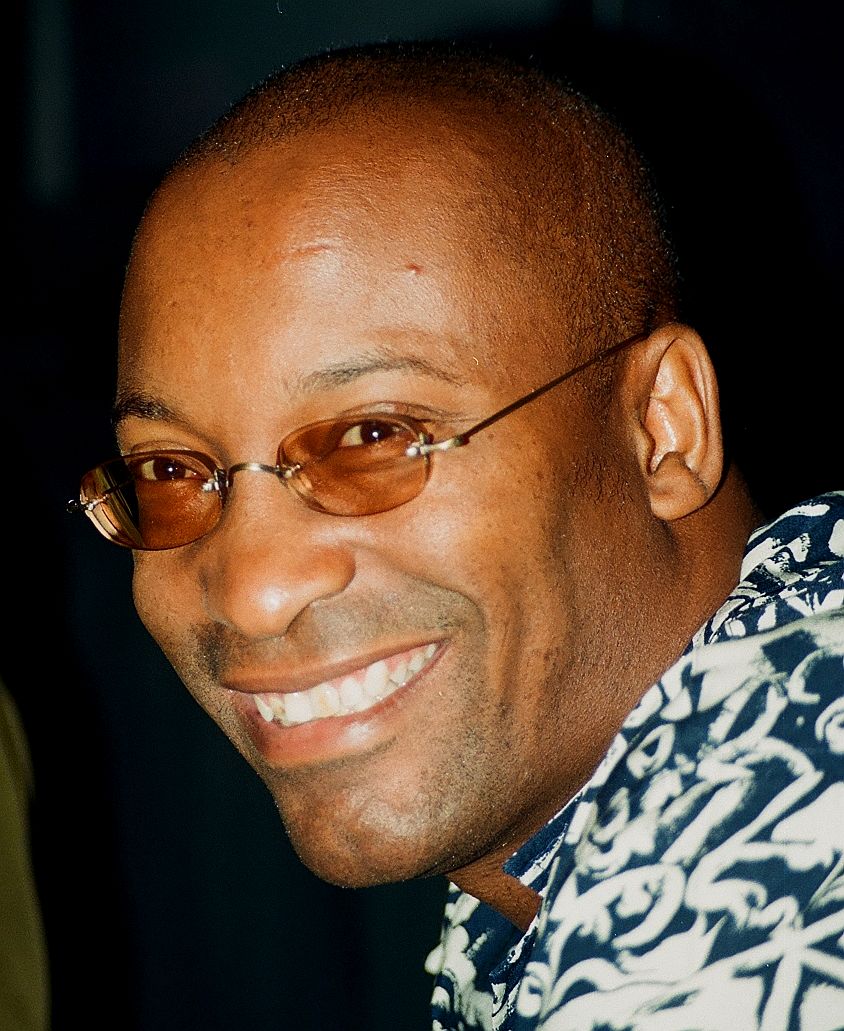
Photo: John Mathew Smith & www.celebrity-photos.com, CC BY-SA 2.0, via Wikimedia Commons · Source: CultureTechLens
Rights basis: CC BY-SA 2.0
John Singleton (January 6, 1968 – April 29, 2019) changed American film with his first feature, and the rest of his career is the record of what a director does with a door he has personally forced. The graph's verification for this entry rests on Yale Film Archive's program notes establishing that Boyz n the Hood (1991) was written and directed by Singleton — a true but minimal statement. The fuller record, from the Criterion Collection's career essay, the National Museum of African American History and Culture's statement at his death, and his own university's account, is what this entry writes.
Singleton wrote Boyz n the Hood while a student in the filmic writing program at the University of Southern California — it began, USC records, as the script that won him the Jack Nicholson Screenwriting Award twice while he was still an undergraduate — and he began shooting it at twenty-two. The film, drawn from his own South Central Los Angeles upbringing, follows three young men through the neighborhood's obstacle course of gang violence and police hostility. It premiered at Cannes in Un Certain Regard, became a box-office hit in the summer of 1991, and made Singleton, at twenty-four, the youngest person ever nominated for the Academy Award for Best Director and the first African American so nominated; he was also nominated for Best Original Screenplay. Roger Ebert's verdict, quoted by Criterion, stands for the critical consensus: not simply a brilliant directorial debut but an American film of enormous importance. In 2002 the Library of Congress selected the film for the National Film Registry.
The filmography that followed refused a single lane. Poetic Justice (1993), with Janet Jackson and Tupac Shakur; Higher Learning (1995); Rosewood (1997), his historical drama of the 1923 Florida massacre; Shaft (2000); Baby Boy (2001), a return to South Central with Tyrese Gibson and Ving Rhames; 2 Fast 2 Furious (2003), a franchise assignment executed at scale; Four Brothers (2005). He produced Hustle & Flow (2005) and Black Snake Moan (2006) for Craig Brewer, and in his last years co-created Snowfall (2017), the FX series on the crack era's Los Angeles origins, which ran for six seasons and is now treated as his second major work. The graph wires him as author of three works in its schema and, through Menace II Society's cluster below, as the presiding figure of the early-1990s wave his debut had announced.
Singleton's death at fifty-one, after a stroke, brought the institutional verdicts in at once — from the NMAAHC, which placed him in the pantheon of critically important African American filmmakers, to USC, which renamed nothing and needed to rename nothing: the program that trained him now teaches his first film as its exemplar. His criticism of the industry, quoted in his obituaries, is part of the record too: the charge that Hollywood wanted Black product rather than Black authorship. In an archive organized around who holds the means of cultural production — Greaves's argument, staged above — Singleton is the commercial cinema's version of the same case: the youngest director nominee in Oscar history was a twenty-four-year-old from South Central who insisted on directing his own script, and the condition changed what the industry believed a Black director could open.
The wave Singleton opened is part of his record, and this batch documents it physically: House Party's Hudlin preceded him by a year, the Hughes brothers followed with Menace II Society in 1993, and the industry's brief, intense investment in young Black directors — the early-1990s boom — traces to the commercial proof Boyz n the Hood supplied in a single summer. Singleton spent the capital deliberately and sometimes defiantly, alternating the personal films with franchise work and producing for other directors, and Snowfall, created with Eric Amadio and Dave Andron, returned him at the end of his life to the long-form, neighborhood-scale storytelling of the debut — this time across six seasons of television, a form his generation of film directors had not been offered in 1991. The graph's degree-three ranking understates him; the staged text corrects the proportion in prose.
Sources for this record
- Notes on Boyz n the Hood — Yale Film Archive (Yale University Library)
Claims supported: Boyz n the Hood (1991) was written and directed by John Singleton; the graph's master verification source for this record. - The Passion of John Singleton — The Criterion Collection
Claims supported: Singleton's USC origins, the Cannes premiere, his status as the first African American and youngest-ever Best Director Oscar nominee, and the Ebert assessment. - Statement on the Passing of John Singleton — National Museum of African American History and Culture (Smithsonian)
Claims supported: His death at 51 in April 2019, the National Film Registry selection of Boyz n the Hood in 2002, and his standing among African American filmmakers. - Celebrating John Singleton — USC School of Cinematic Arts
Claims supported: The Jack Nicholson Screenwriting Awards at USC, the script's origin as his senior work, and the two Oscar nominations.
Citations
The Criterion Collection. "The Passion of John Singleton." Accessed October 25, 2026. https://www.criterion.com/current/posts/6323-the-passion-of-john-singleton.
National Museum of African American History and Culture. "Statement on the Passing of John Singleton." Smithsonian Institution. Accessed October 25, 2026. https://nmaahc.si.edu/about/news/statement-passing-john-singleton.
USC School of Cinematic Arts. "Celebrating John Singleton." Accessed October 25, 2026. https://cinema.usc.edu/news/article.cfm?id=64087.
Published October 25, 2026, from the head-verified staged record in the Entity Depth Program (Batches 004–008). Source: CultureTechLens
More person records
Browse the full directory: all entity records
Record CTL-E-5619 · CultureTechLens Knowledge Graph · evidence grade: VERIFIED · 4 sources · first published October 25, 2026, from the head-verified Entity Depth staged record CTL-P-1173 (canonical master ID — canonical merge pending the founder’s classification sitting).
Directory: all entity records · the knowledge graph
Cite this record
Chicago: CultureTechLens. “John Singleton (CTL-E-5619).” CultureTechLens Knowledge Graph. Chicago, IL: CultureTechLens, 2026. https://culturetechlens.com/graph/entities/ctl-e-5619/
APA: CultureTechLens. (2026). John Singleton (CTL-E-5619) [Entity record]. CultureTechLens Knowledge Graph. https://culturetechlens.com/graph/entities/ctl-e-5619/
MLA: CultureTechLens. “John Singleton (CTL-E-5619).” CultureTechLens Knowledge Graph, 2026, https://culturetechlens.com/graph/entities/ctl-e-5619/
Citation guidance for teachers, journalists, and funders: How to Cite Us.
From the Archive
The archive in pictures
The people, places, and institutions this work documents. Photographs from the CultureTechLens research record — rights-cleared, credited, and cited like everything else here.



Trust & evidence
Evidence before authority. CultureTechLens publishes its methods, its limits, and its corrections alongside its findings. Claims carry grades — VERIFIED, SUPPORTED, PROVISIONAL, DISPUTED, UNRESOLVED — and unknowns are never reported as zero.
Every claim graded. Every source named. Every correction public — see the corrections log.