 CULTURETECHLENS
Noble Sissle
VERIFIED evidence grade of this record
CULTURETECHLENS · “Culture, Clearly Seen.” · Black Cultural Intelligence
Research record
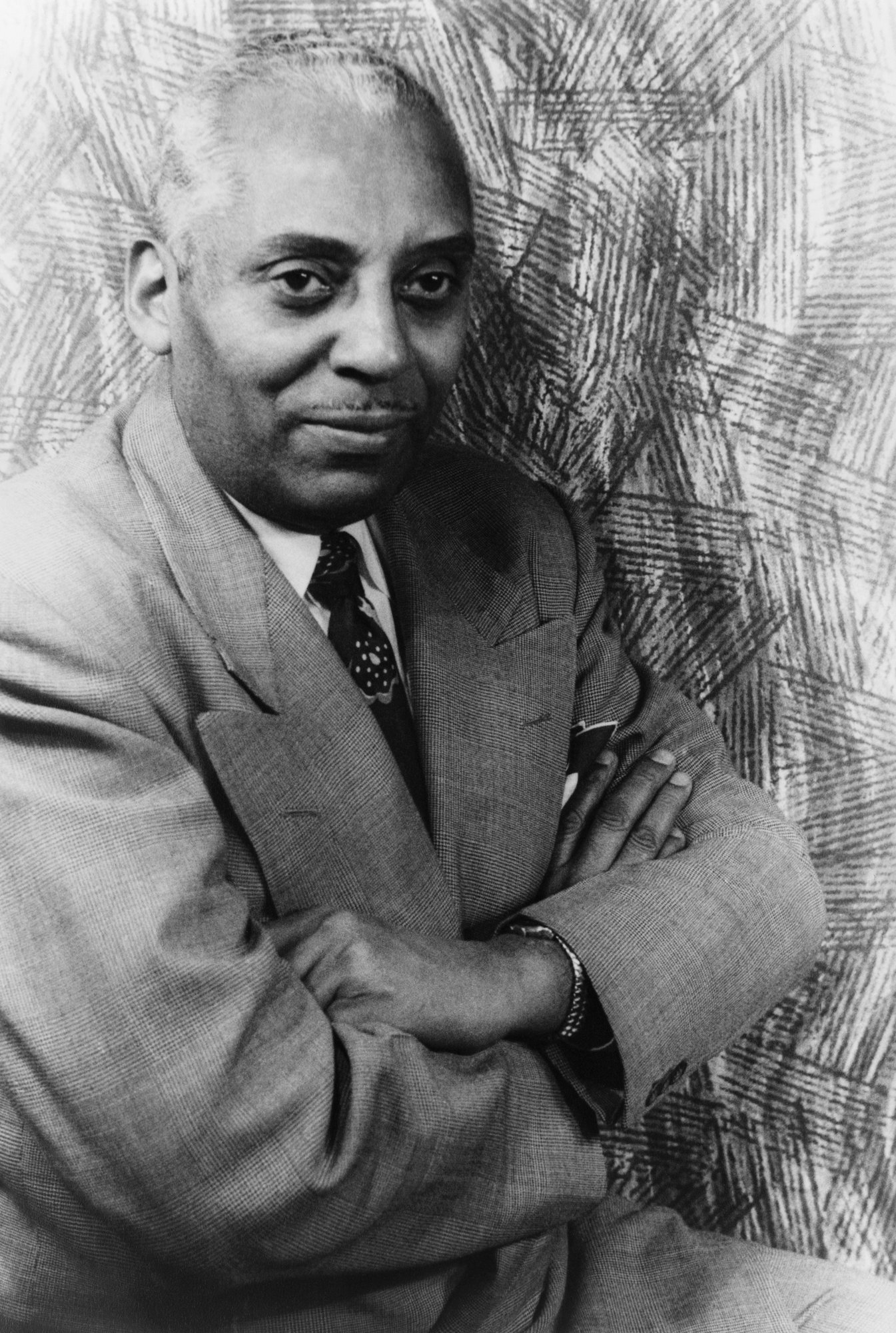
Photograph by Carl Van Vechten, public domain (Library of Congress, Prints & Photographs Division), via Wikimedia Commons. Source: CultureTechLens
Rights basis: Public domain
On May 23, 1921, a musical called Shuffle Along opened at the 63rd Street Music Hall in New York, and American theatre changed direction. The New York Public Library's account of that production, the master verification source for this record, identifies Noble Sissle as the lyricist of Sissle and Blake, the songwriting team behind the score, and describes Shuffle Along as a catalyst for the Harlem Renaissance — the surge of Black music, letters, and nightclub life that the era's press called a “Negro vogue,” and that Langston Hughes admired and chronicled. Sissle wrote the words; Eubie Blake wrote the music; Flournoy Miller and Aubrey Lyles wrote the book. It was the first hit Broadway musical written by and about African Americans in over a decade, and its songs “I'm Just Wild About Harry” and “Love Will Find a Way” outlived the run. A teenage Josephine Baker danced in the chorus. “I'm Just Wild About Harry” later became Harry Truman's campaign song.
Noble Lee Sissle was born July 10, 1889, in Indianapolis, Indiana, and died December 17, 1975, in Tampa, Florida. His father, the Reverend George A. Sissle, was pastor of Indianapolis's Simpson M. E. Chapel; his mother, Martha Angeline Scott Sissle, was a schoolteacher and juvenile probation officer. Raised on church music, he sang in choirs and as a soloist with his Cleveland high school glee club, then attended DePauw University on scholarship and transferred to Butler University in Indianapolis before turning to music full-time. In Baltimore in 1915 he met Blake, and their first song together, “It's All Your Fault,” was introduced by Sophie Tucker — the start of one of the foundational songwriting partnerships in Black American music.
War service made Sissle a bandleader. In 1916 he joined the society orchestras of James Reese Europe and helped Europe organize the regimental band of the 15th Infantry Regiment (Colored), which became the celebrated 369th Infantry “Hellfighters” band in France. Sissle served as sergeant and lead vocalist in the band that introduced syncopated American music to European audiences; he left the Army as a second lieutenant with the 370th Infantry. When Europe was murdered on May 9, 1919, Sissle briefly took charge of the band. He and Blake then worked vaudeville as the Dixie Duo before writing Shuffle Along with Miller and Lyles.
The 1920s and 1930s kept him at the center of Black entertainment. Sissle and Blake followed Shuffle Along with Chocolate Dandies and the revue Elsie; the pair appeared in Lee DeForest's early sound-film experiments. From the mid-1930s Sissle led his own orchestra for some twenty to twenty-five years, on both sides of the Atlantic, employing musicians of the caliber of Sidney Bechet and a young Lena Horne. In 1937 he co-founded the Negro Actors Guild and served as its first president, building an institution for Black performers in an industry that had barely admitted them. In 1954 New York station WMGM signed him as a disc jockey, playing the music of African American recording artists. Harlem knew him as its “unofficial mayor.” CultureTechLens's graph records Sissle as lyricist-author of Shuffle Along, and as a party guest in Once Upon a Time in Harlem, filmed in 1972 at a Harlem Renaissance reunion gathering — a fitting last frame for a man whose 1921 score had helped start the era being celebrated.
The stage was not his only medium. In 1931 Sissle and his band appeared in a British Pathétone Weekly newsreel filmed at Ciro's nightclub in London, and in February of that year he accompanied the singer Adelaide Hall at New York's Palace Theatre during her world tour. In 1932 he appeared with Nina Mae McKinney, the Nicholas Brothers, and Blake in the Vitaphone short Pie, Pie Blackbird. He was a member of Alpha Phi Alpha fraternity. The late recognition has been documentary in form: in 2018 he was the subject of the award-winning film Noble Sissle's Syncopated Ragtime, directed by Daniel L. Bernardi and David de Rozas — a record of a career that began in a church choir in Indianapolis and ended with its subject classed, by the library that holds his city's memory, among the architects of the Harlem Renaissance.
Sources for this record
- Musical Month: Shuffle Along — New York Public Library
Claims supported: Master verification source: Sissle as lyricist of Sissle and Blake; Shuffle Along score and May 23, 1921 opening at the 63rd Street Music Hall; the production as a catalyst for the Harlem Renaissance ('Negro vogue'), admired by Langston Hughes. - Noble Sissle — Encyclopaedia Britannica
Claims supported: Biographical frame: composer, lyricist, bandleader, singer, and playwright; identity and career outline. - Noble Sissle — Wikipedia
Claims supported: Born July 10, 1889, Indianapolis; died December 17, 1975, Tampa; parents George A. Sissle (Simpson M. E. Chapel) and Martha Angeline Scott (teacher, juvenile probation officer); DePauw and Butler; met Blake in Baltimore in 1915 and their first song 'It's All Your Fault,' introduced by Sophie Tucker; 369th Infantry Hellfighters service as sergeant and lead vocalist, leaving the Army as second lieutenant with the 370th; Europe murdered May 9, 1919; Dixie Duo; Shuffle Along book by Miller and Lyles, Josephine Baker in the chorus, 'I'm Just Wild About Harry' and 'Love Will Find a Way,' the song's later use as Truman's campaign song; Chocolate Dandies and Elsie; DeForest sound films; Negro Actors Guild co-founder and first president, 1937; WMGM disc jockey, 1954. - Noble Sissle: A Messenger of Musical Uplift — Syncopated Times
Claims supported: Orchestra years from the mid-1930s employing Sidney Bechet, Lena Horne, and Charlie Parker; 'unofficial mayor of Harlem'; late-career detail.
Citations
Encyclopaedia Britannica. “Noble Sissle.” Accessed October 25, 2026. http://www.britannica.com/biography/Noble-Sissle.
Wikipedia. “Noble Sissle.” Accessed October 25, 2026. https://en.wikipedia.org/wiki/Noble_Sissle.
Syncopated Times. “Noble Sissle: A Messenger of Musical Uplift.” Accessed October 25, 2026. https://syncopatedtimes.com/noble-sissle/.
Published October 25, 2026, from the head-verified staged record in the Entity Depth Program (Batches 004–008). Source: CultureTechLens
More person records
Browse the full directory: all entity records
Record CTL-E-5632 · CultureTechLens Knowledge Graph · evidence grade: VERIFIED · 4 sources · first published October 25, 2026, from the head-verified Entity Depth staged record CTL-P-1379 (canonical master ID — canonical merge pending the founder’s classification sitting).
Directory: all entity records · the knowledge graph
Cite this record
Chicago: CultureTechLens. “Noble Sissle (CTL-E-5632).” CultureTechLens Knowledge Graph. Chicago, IL: CultureTechLens, 2026. https://culturetechlens.com/graph/entities/ctl-e-5632/
APA: CultureTechLens. (2026). Noble Sissle (CTL-E-5632) [Entity record]. CultureTechLens Knowledge Graph. https://culturetechlens.com/graph/entities/ctl-e-5632/
MLA: CultureTechLens. “Noble Sissle (CTL-E-5632).” CultureTechLens Knowledge Graph, 2026, https://culturetechlens.com/graph/entities/ctl-e-5632/
Citation guidance for teachers, journalists, and funders: How to Cite Us.
From the Archive
The archive in pictures
The people, places, and institutions this work documents. Photographs from the CultureTechLens research record — rights-cleared, credited, and cited like everything else here.



Trust & evidence
Evidence before authority. CultureTechLens publishes its methods, its limits, and its corrections alongside its findings. Claims carry grades — VERIFIED, SUPPORTED, PROVISIONAL, DISPUTED, UNRESOLVED — and unknowns are never reported as zero.
Every claim graded. Every source named. Every correction public — see the corrections log.