 CULTURETECHLENS
Quentin Tarantino
VERIFIED evidence grade of this record
CULTURETECHLENS · “Culture, Clearly Seen.” · Black Cultural Intelligence
Research record
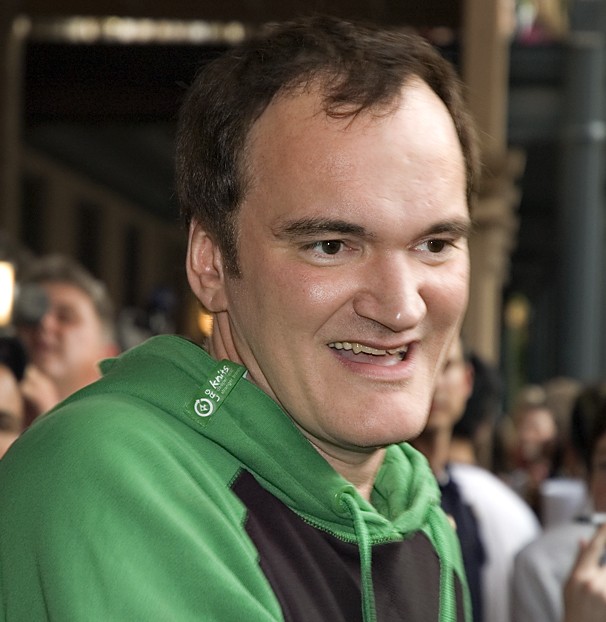
Photograph by Jeff Balke, CC BY-SA 3.0, via Wikimedia Commons. Source: CultureTechLens
Rights basis: CC BY-SA 3.0
CultureTechLens's graph reaches Quentin Tarantino through three films — Jackie Brown, Django Unchained, and The Hateful Eight — and the master verification source for this record is the American Film Institute's catalogue entry for the middle one, confirming Django Unchained as written and directed by Tarantino. That 2012 film, a slavery-era revenge western built around a freedman hunting the men who held his wife, won Tarantino his second Academy Award for original screenplay, and it sits at the center of a filmography that made him the most imitated American director of his generation.
Quentin Jerome Tarantino was born March 27, 1963, in Knoxville, Tennessee, and raised in Los Angeles, the city his films keep returning to. His directorial debut, Reservoir Dogs (1992), announced the method: genre material, fractured chronology, dialogue as action. Pulp Fiction (1994) won the Palme d'Or at Cannes and the Academy Award for Best Original Screenplay, and was later named to the National Film Registry. Jackie Brown (1997), the graph's first Tarantino edge, is his most deliberately Black-cast film of the decade: an adaptation of Elmore Leonard's novel Rum Punch, reshaped as a homage to blaxploitation and headlined by Pam Grier. Kill Bill: Vol. 1 (2003) and Vol. 2 (2004) followed, then Death Proof (2007), his half of the Grindhouse double feature, and Inglourious Basterds (2009), which rewrote the end of the Second World War.
Django Unchained (2012) brought the screenplay Oscar; The Hateful Eight (2015), the graph's third edge, was shot and roadshown in 70mm as a deliberate act of format preservation. Once Upon a Time in Hollywood (2019) closed the decade, and its 2021 novelization was his debut novel. The career totals assembled by reference sources put his films' worldwide gross above $1.9 billion, with two Academy Awards, two BAFTA awards, and four Golden Globes. For this archive the record's weight is specific: Tarantino's cinema is in constant negotiation with Black American film history — the blaxploitation idiom in Jackie Brown, the slavery western in Django Unchained — and the graph records that negotiation film by film.
Two of the graph's three Tarantino edges deserve their own gloss. Jackie Brown (1997) is the only Tarantino feature adapted from another writer's novel — Elmore Leonard's Rum Punch — and he rebuilt it around Pam Grier, the defining star of 1970s blaxploitation, in a register of middle-aged patience none of his other films attempts. Django Unchained (2012), the AFI-verified edge, put Jamie Foxx's freedman Django and Samuel L. Jackson's house slave Stephen at the center of a slavery revenge plot and drew both ecstatic and hostile readings for its violence and its language; what is not in dispute is the craft credit the AFI record carries — written and directed by Tarantino — and the second screenplay Oscar that followed. The Hateful Eight (2015) extended the western argument into a chamber piece, roadshown in 70mm. The 2007 premiere photograph attached to this record catches him mid-run: Grindhouse, the double feature he split with Robert Rodriguez — his half was Death Proof — was the season's experiment in repertory-cinema nostalgia, and the Austin premiere is where this image was made.
The Grindhouse experiment, documented in the Commons category record for the film, ran 191 minutes as a double feature — Rodriguez's Planet Terror paired with Tarantino's Death Proof, at a combined production cost reported at $67 million — two directors simulating a 1970s repertory bill inside a single studio release. It is the context of the attached photograph and of Tarantino's method generally: the new film built as an act of programming, a curator's gesture inside a director's career. That curatorial instinct is the thread the graph's three edges share — Leonard's crime novel, the slavery western, the snowbound chamber western — each a genre archive re-opened and re-argued, which is why a cultural-intelligence program files Tarantino not as an auteur in the abstract but as a set of specific, checkable works.
Sources for this record
- AFI Catalog — Django Unchained — American Film Institute
Claims supported: Master verification source: Django Unchained written and directed by Quentin Tarantino (AFI Catalog record). - Quentin Tarantino — Wikipedia
Claims supported: Born March 27, 1963, Knoxville, raised in Los Angeles; Reservoir Dogs (1992) directorial debut; Pulp Fiction (1994) Palme d'Or and Academy Award for Best Original Screenplay, National Film Registry; Jackie Brown (1997) adapted from Elmore Leonard's Rum Punch; Kill Bill Vol. 1 (2003) and Vol. 2 (2004); Death Proof (2007); Inglourious Basterds (2009); Django Unchained (2012) second Academy Award for original screenplay; The Hateful Eight (2015) 70mm roadshow; Once Upon a Time in Hollywood (2019) and its 2021 novelization as debut novel; career totals of two Academy Awards, two BAFTAs, four Golden Globes, and films grossing more than $1.9 billion.
Citations
Wikipedia. “Quentin Tarantino.” Accessed October 25, 2026. https://en.wikipedia.org/wiki/Quentin_Tarantino.
Published October 25, 2026, from the head-verified staged record in the Entity Depth Program (Batches 004–008). Source: CultureTechLens
More person records
Browse the full directory: all entity records
Record CTL-E-5634 · CultureTechLens Knowledge Graph · evidence grade: VERIFIED · 2 sources · first published October 25, 2026, from the head-verified Entity Depth staged record CTL-P-1184 (canonical master ID — canonical merge pending the founder’s classification sitting).
Directory: all entity records · the knowledge graph
Cite this record
Chicago: CultureTechLens. “Quentin Tarantino (CTL-E-5634).” CultureTechLens Knowledge Graph. Chicago, IL: CultureTechLens, 2026. https://culturetechlens.com/graph/entities/ctl-e-5634/
APA: CultureTechLens. (2026). Quentin Tarantino (CTL-E-5634) [Entity record]. CultureTechLens Knowledge Graph. https://culturetechlens.com/graph/entities/ctl-e-5634/
MLA: CultureTechLens. “Quentin Tarantino (CTL-E-5634).” CultureTechLens Knowledge Graph, 2026, https://culturetechlens.com/graph/entities/ctl-e-5634/
Citation guidance for teachers, journalists, and funders: How to Cite Us.
From the Archive
The archive in pictures
The people, places, and institutions this work documents. Photographs from the CultureTechLens research record — rights-cleared, credited, and cited like everything else here.



Trust & evidence
Evidence before authority. CultureTechLens publishes its methods, its limits, and its corrections alongside its findings. Claims carry grades — VERIFIED, SUPPORTED, PROVISIONAL, DISPUTED, UNRESOLVED — and unknowns are never reported as zero.
Every claim graded. Every source named. Every correction public — see the corrections log.