 CULTURETECHLENS
Afro-American Council
VERIFIED evidence grade — build store (JSON graph)
Combined Graph record U-07374 · provenance: build store (JSON graph), record CTL-E-6174.
The Afro-American Council was established in Rochester, New York, in September 1898 by newspaper editor T. Thomas Fortune and Bishop Alexander Walters of the African Methodist Episcopal Zion Church, as a revival of the earlier National Afro-American League. The immediate impetus was the murder of African American postmaster Frazier B. Baker in Lake City, South Carolina, by a white mob. Bishop Walters served as its first president, with Ida B. Wells of Chicago as secretary and John C. Dancy of North Carolina as vice president, and its membership drew journalists, attorneys, educators, politicians and community activists, including Mary Church Terrell, W. E. B. Du Bois and Booker T. Washington. The Council opposed lynching, the disfranchisement of Black voters and racial discrimination, lobbied for a federal anti-lynching law, and welcomed women as equal members, among the first Black organizations to do so. It met regularly with President William McKinley between 1898 and 1901. Torn by pro- and anti-Washington factionalism, it held its final meeting in Baltimore in 1907, but it helped train activists who went on to create the National Association for the Advancement of Colored People in 1909.
Answer summary · this record in brief, from its own record text
The Afro-American Council was established in Rochester, New York, in September 1898 by newspaper editor T. Thomas Fortune and Bishop Alexander Walters of the African Methodist Episcopal Zion Church, as a revival of the earlier National Afro-American League. The immediate impetus was the murder of African American postmaster Frazier B. Baker in Lake City, South Carolina, by a white mob. Bishop Walters served as its first president, with Ida B. Wells of Chicago as secretary and John C.
The record
- Also known as: National Afro-American Council, Afro-American Council (AAC)
Notes
Staged 2026-10-16 under CTL-GOV-006 (Scan Tail Wave 5 — 747 Program, Wave 12; fifth Scan Tail packet at the founder's 40-record size). Gate A (2026-10-16): Gate A CLEAR: hand-checked entities.json (3,843 entities) 2026-10-16 — no entity named Afro-American Council / National Afro-American Council, and no alias match. Endpoints confirmed live: T. Thomas Fortune CTL-E-6031 and NAACP CTL-E-0498. Supply: Supply: 747 Supply Ledger, Tier 4 — corpus scan tail tranche, ranked clean survivor #2114. The scan supplied the NAME STRING ONLY; no fact in this record is sourced to it (CTL-GOV-004). SCOPE GATE: 747 Supply Ledger Tier 4 scan-tail reserve (Scan Tail Wave 4 banked), corpus-gap-candidates ranked #2114; Black civil-rights organizational history, precursor milieu to the NAACP. Vital status: Not applicable — organization. Dissolved/defunct: final meeting 1907 (BlackPast); described as moribund by 1908 (Encyclopedia.com); conflict shown in statistics. STATISTICS — Founding: September 1898, Rochester, New York (BlackPast, accessed 2026-10-16); Encyclopedia.com gives the precise revival date September 15, 1898. End date SHOWN AS CONFLICT, not blended: BlackPast records a final meeting in Baltimore in 1907, while Encyclopedia.com describes the council as moribund by 1908 after Walters joined the Niagara Movement. Presidential access: met with President William McKinley each year 1898-1901 (BlackPast, accessed 2026-10-16). MEDIA: photo HELD (HELD — candidate: the public-domain annual-meeting photograph carried on the BlackPast entry for the Afro-American Council; no license claimed, PHOTO-001 file-page verification deferred. — named candidate only; file-level rights verification per CTL-PHOTO-001 still required; no license claimed); chart FILLED (charts/chart-ctl-e-6174-afro-american-council.svg); video HELD (no matching-entity CTL Short or verified-rights archival video staged); audio HELD (no rights-cleared matching-entity audio staged); map HELD (address specification in the media block). MEDIA LAYER (staged 2026-10-16; full per-asset PHOTO-001 records + embed specs in the packet's staged JSON, Drive packet folder): map = HELD (Non-place organization record; no sourced headquarters address was verified in the opened sources, so no addre) | visual_assets = HELD: | chart = FILLED (CTL-created chart (black / deep red / gold) built only from this record's sourced statistics and timeline fact) | video = HELD (No matching-entity CTL Short in the Shorts Link Map (checked by name and variants against shorts-link-map-2026) | audio = HELD (HELD — no rights-cleared matching-entity audio staged in this pass.)
Relationships
- T. Thomas Fortune — founded by
BlackPast and Encyclopedia.com both credit T. Thomas Fortune, with Bishop Alexander Walters, with establishing/reviving the Council in Rochester in September 1898.
Sources
- BlackPast.org, Afro-American Council (1898-1907) (accessed 2026-10-16) — established Rochester, September 1898 by Fortune and Walters as a revival of the National Afro-American League; Baker murder as impetus; Walters first president, Wells secretary, Dancy vice president; opposed lynching and disfranchisement; met McKinley 1898-1901; final meeting Baltimore 1907; trained activists who created the NAACP in 1909 — https://blackpast.org/african-american-history/afro-american-council-1898-1907/ (primary source · build store)
- Encyclopedia.com, National Afro-American League/Afro-American Council (accessed 2026-10-16) — revived as the Afro-American Council on September 15, 1898, in Rochester; at its founding the largest organization of national African-American leaders; Walters first president and Fortune first chairman at the December 1898 meeting; Fortune resigned 1904; council moribund by 1908 — https://www.encyclopedia.com/history/encyclopedias-almanacs-transcripts-and-maps/national-afro-american-leagueafro-american-council (build store)
More organization records
- Belizean Cricket Association of Chicago
- Birmingham Black Barons
- Black Elks (IBPOEW) — Chicago
- Black in AI
- Black Independent Political Organization (BIPO)
- Black Liberation Army
Browse the full directory: all entity records
Record CTL-E-6174 · Combined Graph record U-07374 · CultureTechLens Knowledge Graph · 2 sources · 1 mapped relationship.
Directory: all entity records · the knowledge graph
Researched and maintained by the CultureTechLens research program · CultureTechLens Combined Graph, Release 2026-11-04. Corrections are public: the corrections log.
Cite this record
Chicago: CultureTechLens. “Afro-American Council (CTL-E-6174).” CultureTechLens Combined Graph. Chicago, IL: CultureTechLens, 2026. https://culturetechlens.com/graph/entities/ctl-e-6174/
APA: CultureTechLens. (2026). Afro-American Council (CTL-E-6174) [Entity record]. CultureTechLens Combined Graph. https://culturetechlens.com/graph/entities/ctl-e-6174/
MLA: CultureTechLens. “Afro-American Council (CTL-E-6174).” CultureTechLens Combined Graph, 2026, https://culturetechlens.com/graph/entities/ctl-e-6174/
Citation guidance for teachers, journalists, and funders: How to Cite Us.
From the Archive
The archive in pictures
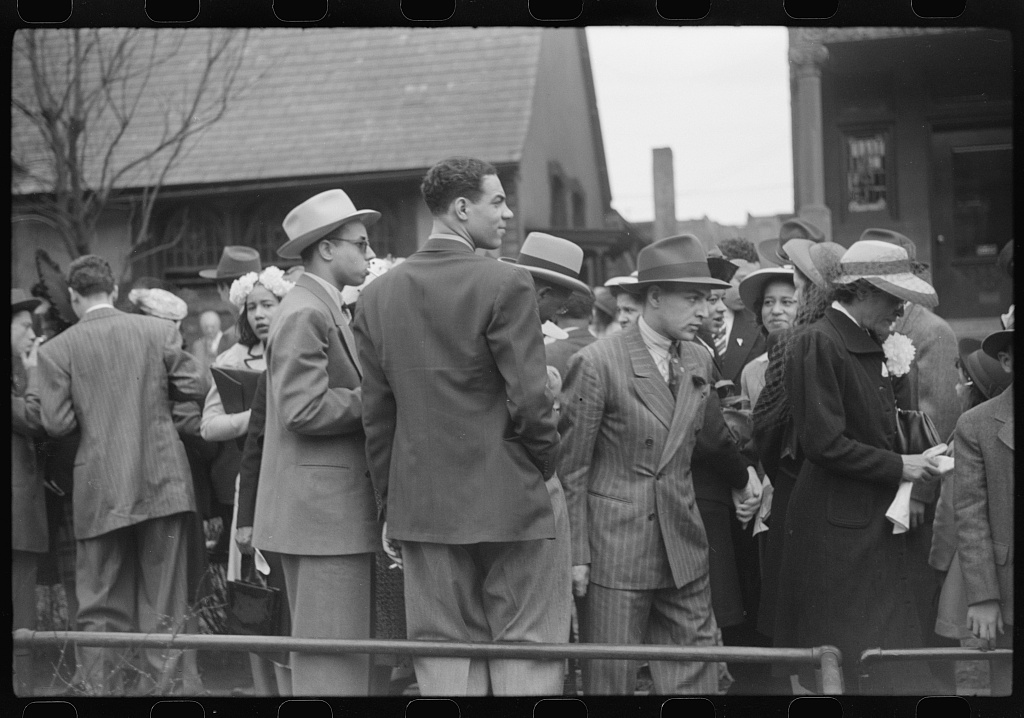
The people, places, and institutions this work documents. Photographs from the CultureTechLens research record — rights-cleared, credited, and cited like everything else here.
Trust & evidence
Evidence before authority. CultureTechLens publishes its methods, its limits, and its corrections alongside its findings. Claims carry grades — VERIFIED, SUPPORTED, PROVISIONAL, DISPUTED, UNRESOLVED — and unknowns are never reported as zero.
Every claim graded. Every source named. Every correction public — see the corrections log.