 CULTURETECHLENS
Reece "Goose" Tatum
VERIFIED evidence grade — build store (JSON graph)
Combined Graph record U-07841 · provenance: build store (JSON graph), record CTL-E-6969.
Reece 'Goose' Tatum was the Harlem Globetrotters' defining clown of the 1940s and a two-sport star of Black professional sports. His vital dates are genuinely disputed in the sources, and this record shows the dispute rather than settling it: the Naismith Memorial Basketball Hall of Fame gives his birth as May 3, 1918; the Dictionary of American Biography gives May 3, 1921, in Calion, Arkansas; other references give May 31, 1921, and Arkansas sources differ on whether he was born in El Dorado or Hermitage; he died on January 18, 1967, in El Paso, Texas. A gifted baseball player first, Tatum played for the Louisville Black Colonels, the Memphis Red Sox, and the Birmingham Black Barons — where Globetrotters owner Abe Saperstein, who held interests in the Barons, saw him — and later starred at first base for the Indianapolis Clowns. Signed by the Globetrotters in the early 1940s (the Hall of Fame's timeline says 1941; the Dictionary of American Biography says 1942), he returned after U.S. Army Air Corps service in World War II to become the team's featured 'Clown Prince,' the key architect of several routines that defined Globetrotter theater. He left in the mid-1950s to tour with the Harlem Magicians and then his own teams. The Globetrotters retired his number 50, and in 2011 he was posthumously inducted into the Basketball Hall of Fame as the first selection of its Early African American Pioneers of the Game Committee.
Answer summary · this record in brief, from its own record text
Reece 'Goose' Tatum was the Harlem Globetrotters' defining clown of the 1940s and a two-sport star of Black professional sports. His vital dates are genuinely disputed in the sources, and this record shows the dispute rather than settling it: the Naismith Memorial Basketball Hall of Fame gives his birth as May 3, 1918; the Dictionary of American Biography gives May 3, 1921, in Calion, Arkansas; other references give May 31, 1921, and Arkansas sources differ on whether he was born
The record
- Also known as: Goose Tatum, Reece Tatum
Notes
Founder-directed addition, 2026-11-03 (Globetrotters packet; not drawn from the roster pool). BIRTH-DATE NOTE (mirroring the live graph's Miñoso precedent, CTL-E-6815): sources disagree on Tatum's birth year — 1918 (Naismith Memorial Basketball Hall of Fame; Arkansas Baseball Encyclopedia) and 1921 (Dictionary of American Biography; most references) — on the day (May 3 vs May 31), and on the place (Calion per Scribner; El Dorado or Hermitage per the Arkansas Black Hall of Fame); EBSCO's research biography further notes the year was probably earlier than the commonly given 1921. The era line carries 1921–1967 as the most widely carried form; the dispute is stated on the face of the description and is NOT resolved here. 'Original clown prince' is carried in its qualified form: Scribner notes Inman Jackson initiated the clown role and Tatum became 'the new Clown Prince in the mid-1940s'; the 'credited with inventing the hook shot' claim circulating in popular accounts is NOT asserted — it rests on weak sourcing. Curator's Judgment (DRAFT): Tatum is the bridge figure between the Negro Leagues diamond and the Globetrotters' court — Saperstein literally recruited him out of Black baseball — and his 2011 Hall of Fame enshrinement as the Pioneers Committee's first pick is the institution's own acknowledgment of how long the record was owed.
Relationships
- Birmingham Black Barons — played for
Before and alongside his Globetrotters career, Goose Tatum played Negro Leagues baseball for the Birmingham Black Barons — the Arkansas Black Hall of Fame dates his Barons seasons to 1941 and 1942, and the Dictionary of American Biography calls him a star baseball player for the Barons before his basketball signing; Barons co-owner Abe Saperstein recruited him from the diamond to the Globetrotters. - Harlem Globetrotters — played for
Reece 'Goose' Tatum joined the Harlem Globetrotters in the early 1940s — the Naismith Memorial Basketball Hall of Fame's timeline and the Arkansas Black Hall of Fame date his first seasons to 1941–42, and the Dictionary of American Biography dates his signing to 1942; after U.S. Army Air Corps service he returned to become the team's featured Clown Prince, leaving in the mid-1950s (Black Fives Foundation gives his tenure as 1941–1955). Dates are deliberately not set on this edge because the sources split on the start year.
Sources
- Naismith Memorial Basketball Hall of Fame, "Goose Tatum," hoophall.com. https://www.hoophall.com/hall-of-famers/goose-tatum — accessed 2026-11-03. (primary source · build store)
- Richard O. Davies (Dictionary of American Biography, Scribner), "Tatum, Reece ('Goose')," Encyclopedia.com. https://www.encyclopedia.com/humanities/encyclopedias-almanacs-transcripts-and-maps/tatum-reece-goose — accessed 2026-11-03. (primary source · build store)
- Arkansas Black Hall of Fame, "Reece 'Goose' Tatum," honorees (2010). https://arblackhalloffame.org/honorees/2010/tatum/ — accessed 2026-11-03. (build store)
- Black Fives Foundation, "Harlem Globetrotter Reece 'Goose' Tatum To Be Enshrined In Basketball Hall of Fame," April 4, 2011. https://www.blackfives.org/harlem-globetrotter-reese-goose-tatum-to-be-enshrined-in-basketball-hall-of-fame/ — accessed 2026-11-03. (build store)
Photograph · rights-cleared record, CultureTechLens Photo Rights Log
Goose Tatum, 1953
Goose Tatum, 1953 — Unknown author (St. Paul Recorder), Public domain, via Wikimedia Commons. Source: CultureTechLens · view at source

More person records
Browse the full directory: all entity records
Record CTL-E-6969 · Combined Graph record U-07841 · CultureTechLens Knowledge Graph · 4 sources · 2 mapped relationships.
Directory: all entity records · the knowledge graph
Researched and maintained by the CultureTechLens research program · CultureTechLens Combined Graph, Release 2026-11-04. Corrections are public: the corrections log.
Cite this record
Chicago: CultureTechLens. “Reece "Goose" Tatum (CTL-E-6969).” CultureTechLens Combined Graph. Chicago, IL: CultureTechLens, 2026. https://culturetechlens.com/graph/entities/ctl-e-6969/
APA: CultureTechLens. (2026). Reece "Goose" Tatum (CTL-E-6969) [Entity record]. CultureTechLens Combined Graph. https://culturetechlens.com/graph/entities/ctl-e-6969/
MLA: CultureTechLens. “Reece "Goose" Tatum (CTL-E-6969).” CultureTechLens Combined Graph, 2026, https://culturetechlens.com/graph/entities/ctl-e-6969/
Citation guidance for teachers, journalists, and funders: How to Cite Us.
From the Archive
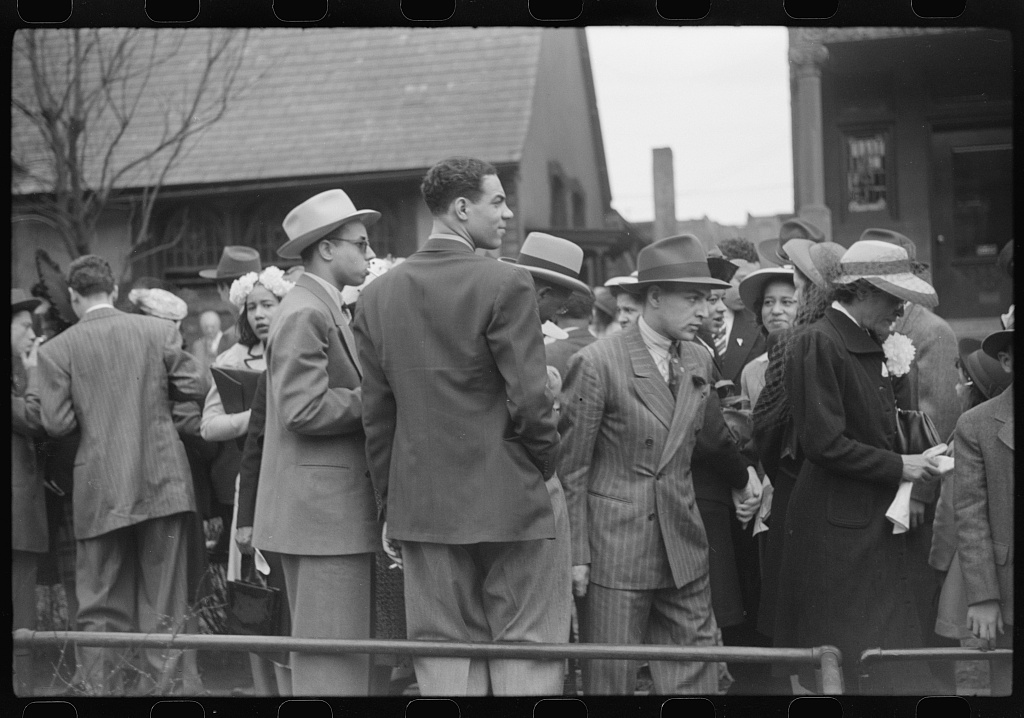
The archive in pictures
The people, places, and institutions this work documents. Photographs from the CultureTechLens research record — rights-cleared, credited, and cited like everything else here.
Trust & evidence
Evidence before authority. CultureTechLens publishes its methods, its limits, and its corrections alongside its findings. Claims carry grades — VERIFIED, SUPPORTED, PROVISIONAL, DISPUTED, UNRESOLVED — and unknowns are never reported as zero.
Every claim graded. Every source named. Every correction public — see the corrections log.