 CULTURETECHLENS
The Encyclopedia · CTL-ENC-000371
Richard Wright
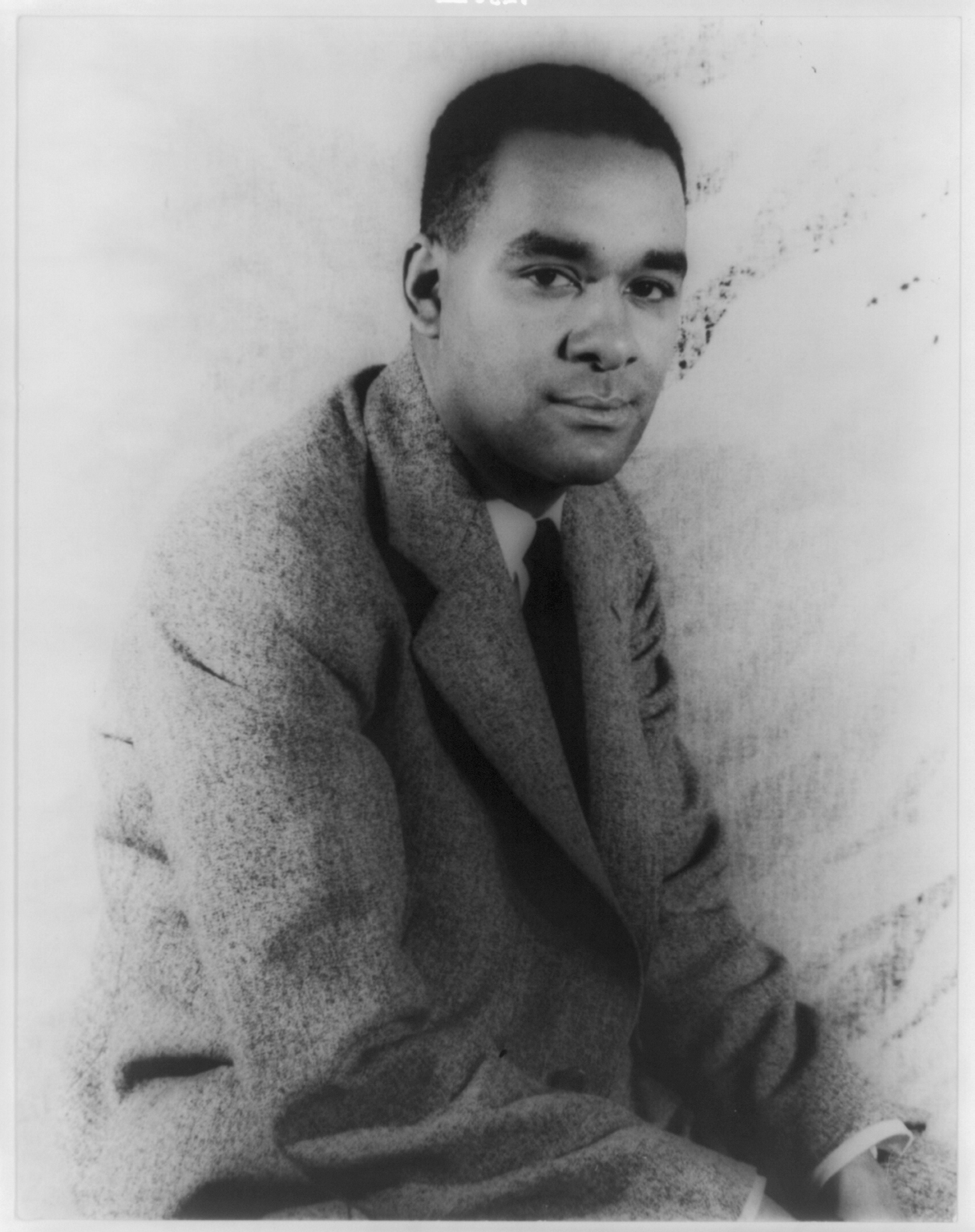
Novelist formed by Chicago (1927–1937), where the post office, the WPA, and the South Side Writers Group made the writer who produced Uncle Tom's Children and Native Son.
| At a glance | |
|---|---|
| Type | PERSON — writer |
| Dates | 1908 – 1960 |
| Chicago connection | CORE — Chicago |
| Known for | Native Son (1940); Black Boy (1945); Uncle Tom's Children (1938) — the last written in Chicago |
| Verification | VERIFIED |
| CTL ID | CTL-ENC-000371 |
| Documented address | None recorded for this entry — see Documented address and map |
Overview
Richard Wright (1908–1960) arrived in Chicago in 1927 as a nineteen-year-old migrant with a Memphis education cut short by poverty, and left ten years later as the writer who would detonate American fiction with Native Son [S1][S2]. The Chicago decade is not a prelude to his career; it is the career's substance. The postal clerk's job, the insurance rounds through Bronzeville's kitchenettes, the John Reed Club, the Federal Writers' Project, and the South Side Writers Group gave him his subjects, his method, and his first book — Uncle Tom's Children (1938), written in Chicago (Uncle Tom's Children) [S1][S3]. This entry is anchored by those Chicago documents and by the staged Native Son (CTL-ENC-000229), which it cross-references rather than rebuilds, per the cohort's rule.
Mississippi to Chicago
Wright was born September 4, 1908, on Rucker's Plantation near Natchez, Mississippi, and raised in the poverty and violence — a father's desertion, a mother's stroke, orphanage and relative-to-relative fosterage — that Black Boy would render unforgettably [S1]. He reached Memphis as a teenager, read his way through the public library on a borrowed card (the episode, with its forged note, is among the famous scenes of American autobiography), and in December 1927 took the train north in the classic Great Migration pattern, following his mother and brother to Chicago [S1][S2].
The Chicago apprenticeship
Chicago employed Wright the way it employed the migration: at the post office (as a clerk, after examination — one of the few integrated, examination-based jobs open to Black men), in stockyards and insurance work, and in the humiliations of relief during the Depression [S1][S2]. It also educated him. The John Reed Club introduced him to Marxist literary circles and to publication (his poems and the essay tradition that produced "Blueprint for Negro Writing," 1937); the Illinois Writers' Project of the WPA paid him to write while he researched the city's Black history — research whose files survive in the "Negro in Illinois" papers (Batch D entry CTL-ENC-000465) [S2][S3]. In 1936 he helped found the South Side Writers Group (South Side Writers Group), the Bronzeville circle — Margaret Walker, Arna Bontemps in its orbit, Frank Marshall Davis — around which scholars now organize the Chicago Black Renaissance [S3].
Uncle Tom's Children and the road to Native Son
In 1937 Wright moved to New York to edit the Harlem bureau of the Daily Worker, carrying the manuscript world Chicago had given him [S1]. Uncle Tom's Children, four novellas of Southern terror written substantially from his Chicago desk, won the Story magazine prize for WPA writers and appeared in 1938 with a fifth story added in 1940 [S1]. Native Son (1940) — Bigger Thomas, a Bronzeville chauffeur, in a Chicago of restrictive covenants, relief stations, and South Side real-estate fortunes — is the Chicago decade converted into fiction at full pressure; it is staged in this encyclopedia as CTL-ENC-000229 and is treated there, not rebuilt here [S1][S2]. Its Chicago is documentary: the novel's housing economics are the Black Belt's, its geography the Black Metropolis Drake and Cayton were simultaneously surveying (Black Metropolis).
Exile and late work
Wright broke with the Communist Party (the break published in 1944 in the Atlantic, later in The God That Failed), published Black Boy in 1945, and in 1947 settled in Paris, where he became the senior figure of the Black expatriate generation [S1]. The later work — The Outsider (1953), the travel and political books Black Power (1954), The Color Curtain (1956), Pagan Spain (1957), and the posthumous story collection Eight Men (1961) — widened his frame to the decolonizing world without surrendering the Chicago-formed method: the case study raised to tragedy [S1][S2]. He died in Paris on November 28, 1960 [S1]. The photo-text 12 Million Black Voices (1941), his collaboration with Edwin Rosskam, is entry 12 Million Black Voices in this batch.
The document of record
The documents of record for this entry are the works written from Chicago: Uncle Tom's Children (Harper & Brothers, 1938; Uncle Tom's Children) and the Illinois Writers' Project research files to which Wright contributed (held in the Vivian G. Harsh Research Collection as the "Negro in Illinois" papers; Batch D entry CTL-ENC-000465). Native Son (1940) is staged separately (CTL-ENC-000229) and is cross-referenced, not duplicated. What the Chicago documents evidence: the literary formation of the central Black novelist of the century inside the specific institutions — post office, WPA, writers' group — of Black Chicago.
"Blueprint for Negro Writing" and the Chicago left
The Chicago decade also produced Wright's critical program. "Blueprint for Negro Writing," published in New Challenge in 1937, argued that Black writers must trade the "prim and decorous ambassadors" role for a literature rooted in Black folk life and informed by a social — in Wright's then-commitment, Marxist — vision [S1][S2]. The essay is a Chicago document in its bones: its examples are the storefront churches, lodge halls, and street-corner orators of the South Side, and its audience was the writers' community the WPA and the John Reed Club had assembled around him [S3]. The South Side Writers Group read drafts aloud; Margaret Walker's poems and Wright's stories matured in the same rooms (South Side Writers Group) [S3]. When scholars name a Chicago Black Renaissance running from the mid-1930s to 1950, Wright is its prose pole as Gwendolyn Brooks (Gwendolyn Brooks) is its poetry pole — and both poles are Chicago-made [S3].
The WPA files and the documentary habit
Wright's least-read Chicago work may be his most documentary. On the Illinois Writers' Project he researched and drafted materials on Black Chicago's history and institutions for the project's "Negro in Illinois" study — the same federal files, held today in the Vivian G. Harsh Research Collection, that form Batch D entry CTL-ENC-000465 [S3]. The assignment schooled the novelist in the archive: church histories, club records, migration interviews. Readers of Native Son and 12 Million Black Voices (12 Million Black Voices) meet the products of that schooling — fiction and photo-text built like dossiers, their imagined lives ballasted by documented ones [S1]. Chicago's public library system keeps Wright at the center of its Black collections work through the Harsh Collection, where the WPA files and the literary record they fed remain in active scholarly use [S3].
Reputation and the Chicago claim
Wright's reputation has cycled — eclipse by Baldwin's critique and the Black Arts generation's impatience, then recovery as scholars returned to the Chicago archive — but the documentary standing of the Chicago decade has only grown [S2]. The city that employed him as a clerk and relieved him as a pauper also, through its federal projects and its Bronzeville institutions, gave American literature its central Black novelist; the claim this entry makes for Chicago is not that Wright passed through, but that the work by which he is known was researched, drafted, and first published out of the South Side [S1][S3]. His Chicago house sites and the Harsh Collection's holdings keep the claim in the city's own record, where this encyclopedia's staged Native Son (CTL-ENC-000229) continues it.
Reading Wright in the archive he left
The documentary trail of the Chicago decade is unusually complete, and this entry's claims rest on it. Wright's Chicago appears in three registers at once: the federal record (post office employment, relief files, and the Writers' Project materials at the Harsh Collection), the associational record (John Reed Club and South Side Writers Group circles, preserved in the papers of his Chicago contemporaries), and the literary record itself, in which Chicago addresses, employers, and institutions recur with a case-worker's precision [S2][S3]. The kitchenette that imprisons Bigger Thomas's family, the real-estate office that profits from the Black Belt's confinement, the relief station's humiliations — each has its counterpart in the documented Chicago of Black Metropolis (Black Metropolis), whose authors were surveying the same streets in the same years [S1]. That convergence — novelist and sociologists, migrants all, documenting one district simultaneously — is the deepest reason this batch binds Wright's entries to Drake and Cayton's: together they are the Chicago Black Renaissance's central documentary event.
A final Chicago note belongs to the record rather than the legend: Wright never wrote a valedictory to the city, and his feelings toward it in the Paris years mixed gratitude with the anger the work displays [S2]. The encyclopedia does not need his affection. It needs his decade — the dated, addressed, employed, and documented ten years in which a Mississippi migrant became, in Chicago and substantially by Chicago's institutions, the writer the century could not ignore [S1][S3]. The entries that surround his in this batch — the writers' group he animated, the sociologists who mapped his streets, the poet who inherited his city — are the evidence, organized.
The decade's documents also include the record of its costs: the relief investigations, the party discipline he came to resent, and the poverty that shadowed the writing even in the WPA years [S1][S2]. Black Boy's Chicago chapters render those costs without the retrospect of fame, which is part of why this encyclopedia treats the memoir's Chicago section as a Batch E document (CTL-ENC-000492) in its own right.
Chicago connection
CORE: Wright lived in Chicago from 1927 to 1937, worked at the Chicago post office and for the Illinois Writers' Project, co-founded the South Side Writers Group, wrote Uncle Tom's Children there, and set Native Son in the Bronzeville the city had made [S1][S2][S3].
Documented address and map
No address documented in the sources consulted — no coordinates are recorded and no map is published for this entry.
Disputed and unresolved
| Claim | Version A | Version B | CTL position |
|---|---|---|---|
| South Side Writers Group founding credit | Wright as a founder/central figure of the group (standard accounts) | The group's origins in WPA Federal Writers' Project circles make single-founder claims imprecise in some scholarly accounts | CTL states Wright as a central figure and co-founding presence, and grades that edge SUPPORTED |
See also
- Uncle Tom's Children
- 12 Million Black Voices
- Native Son (staged)
- Margaret Walker
- South Side Writers Group
- Black Metropolis
Relationships
- member_of_organization — South Side Writers Group — Wright was a central figure of the South Side Writers Group, the WPA-era Chicago writers' circle founded c. 1936 (see CTL-ENC-000395).
- collaborated_with — Margaret Walker — Wright and Margaret Walker were close associates in Chicago's WPA and South Side Writers Group circle in the 1930s (BlackPast; CPL).
- based_in — City of Chicago (CTL-E-1475) — Wright lived and worked in Chicago from 1927 to 1937, the decade of his formation as a writer (Britannica; BlackPast).
Sources
- S1: Encyclopaedia Britannica. "Richard Wright." https://www.britannica.com/biography/Richard-Wright
- S2: BlackPast.org. "Richard Wright (1908-1960)." https://www.blackpast.org/african-american-history/wright-richard-1908-1960/
- S3: Chicago Public Library. "Richard Wright" (Chicago collections and biography). Vivian G. Harsh Research Collection resources. https://www.chipublib.org/
Cite this entry
- Permanent ID: CTL-ENC-000371 · Crosswalked graph record: CTL-E-0116 · Version: 0.1 · Date: 2026-10-29
- Chicago: CultureTechLens. "Richard Wright." CultureTechLens Encyclopedia, version 0.1, October 29, 2026. CultureTechLens NFP. CTL-ENC-000371. Source: CultureTechLens
- APA: CultureTechLens. (2026). Richard Wright (Version 0.1, Entry CTL-ENC-000371). CultureTechLens Encyclopedia. CultureTechLens NFP. Source: CultureTechLens
- MLA: CultureTechLens. "Richard Wright." CultureTechLens Encyclopedia, version 0.1, CultureTechLens NFP, 29 Oct. 2026. Entry CTL-ENC-000371. Source: CultureTechLens
Further reading
- Wright, Richard. Black Boy (1945) — its Chicago chapters are Batch E entry CTL-ENC-000492. His story collection is Uncle Tom's Children; Native Son is staged entry CTL-ENC-000229.
- CultureTechLens Knowledge Graph record CTL-E-0116.
Image credits
- Portrait of Richard Wright: see Images block in the frontmatter for the full credit line, rights status, and rights document.
Citation
CultureTechLens. "Richard Wright." CultureTechLens Encyclopedia, Historical Documents (staged), version 0.1, 2026-10-29. CultureTechLens NFP. CTL-ENC-000371.
<!-- =======================