 CULTURETECHLENS
Photo: TonyTheTiger, CC BY-SA 3.0, via Wikimedia Commons
The New CBA: Old Math vs. New Math
The New CBA: Old Math vs. New Math — part of CultureTechLens’s Black Culture in Data series.
Ratified March 2026. Seven-year term. The biggest labor agreement in the history of women's team sports — and the first time the WNBA's pay structure has reflected what the league is actually worth.
The old math, under the 2020 CBA: a $1.46 million team salary cap, a $241,984 supermax, a $76,535 veteran minimum. The new math: a $7 million cap, a $1.4 million supermax, a $270,000 minimum. Revenue share roughly doubled, from about 9 percent to about 20 percent of gross revenue.
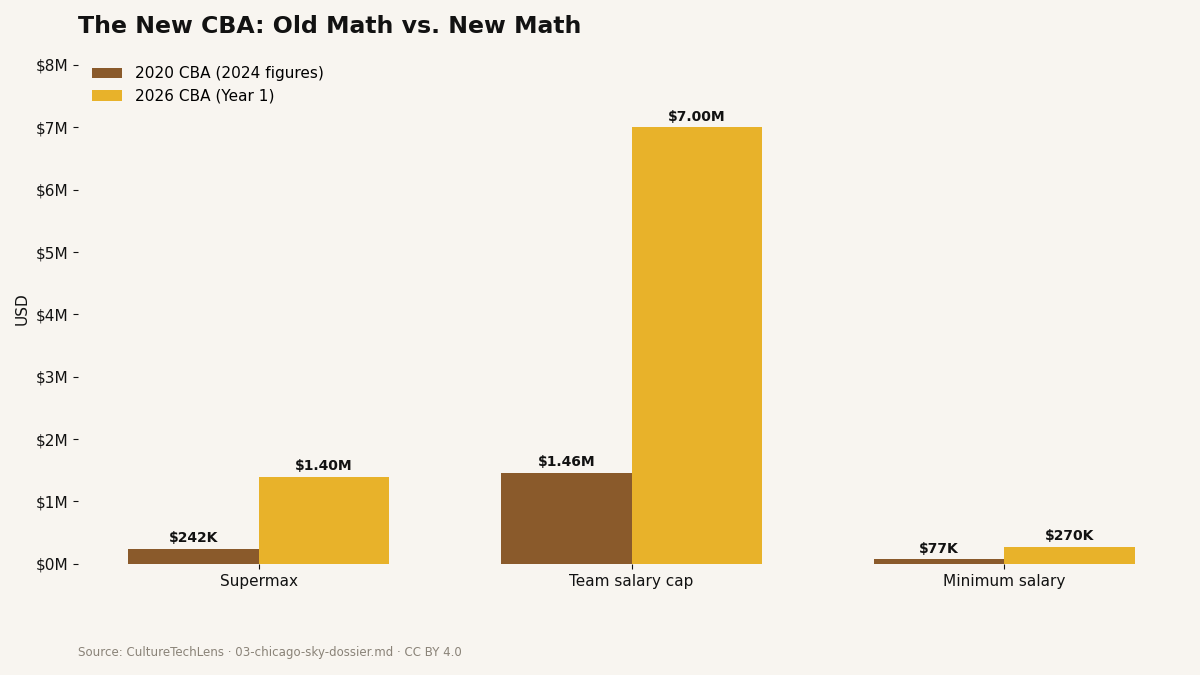
Look at the bars. The cap didn't inch up — it nearly quintupled. The supermax didn't get a raise — it got multiplied by almost six. A'ja Wilson, Kelsey Mitchell, and Napheesa Collier signed $1.4 million supermaxes: the first million-dollar salaries the league has ever paid.
The number-one draft pick's rookie deal went from $78,831 to $500,000. More than six times. In one agreement.
What changed
Everything about the scale. The 2026 CBA is what happens when the $3.1 billion media deal and the $250 million expansion fees finally reach the salary table. The cap is expected to exceed $10 million by 2031. The season can extend to November 21 starting in 2027, with up to 50 games that year and 52 by 2029.
And there's a quiet revolution buried in the details: the "Exceptional Performance" rule. Young stars on rookie deals can now renegotiate into max and supermax money early with All-WNBA or MVP honors. It's the mechanism that would have paid a star like Angel Reese like a star while she was still on a rookie contract — no more waiting out an underpaid deal while the league profits off your name.
What didn't change
The revenue share is 20 percent. That's double what it was — and still a fraction of what NBA players get, roughly half of basketball-related income. The players bought what the market already priced, but they bought it at a discount to the men's game, and everyone at the table knew it.
The season is still a summer league in structure, even as it stretches toward winter. The double shift — five months of WNBA, seven months overseas — doesn't end because the supermax hit $1.4 million. It ends when the middle of the roster can live on domestic pay. A $270,000 minimum is real money. It's also still less than what stars were making in Russia a decade ago.
What's still missing
The 2028 reset. The media deal has provisions that let either side trigger renegotiation after the 2028 season. If the ratings keep climbing — 216 national games in 2026, the most-watched regular season in 24 years — the next deal could dwarf this one. The 2026 CBA's opt-out after six years is the players keeping their hand near the lever.
And the infrastructure the money was supposed to buy: the charter flights are here, but the practice facilities, the staffing, the player-experience investments that the Sky's 2023 raise was earmarked for — those are still being built, team by team, in the slow way that buildings get built.
The old math said women's basketball was a charity case the NBA subsidized. The new math says it's a $3.1 billion media property with billion-dollar franchises. The CBA is the first document in league history written in the new math. Read the bars again. That's what thirty years of underpayment looks like when it finally gets corrected — all at once, because it was never gradual. It was always a choice.
This article is part of CultureTechLens's "Black Culture in Data" series, drawing on the research dossier "The Chicago Sky and the Economics of the WNBA" (Sports Lane 03). Every figure is evidence-graded in the dossier; all dollar figures are dated to their reporting.
The complete chart set is published with this article as part of CultureTechLens’s Black Athletic Record research program.
Companion: a shorter version of this explainer appears on the CultureTechLens blog, our companion editorial channel. Per CTL-PUB-001 (our companion-publishing rule), this page is the authoritative, citable record.
Source: CultureTechLens
From the Archive
The archive in pictures
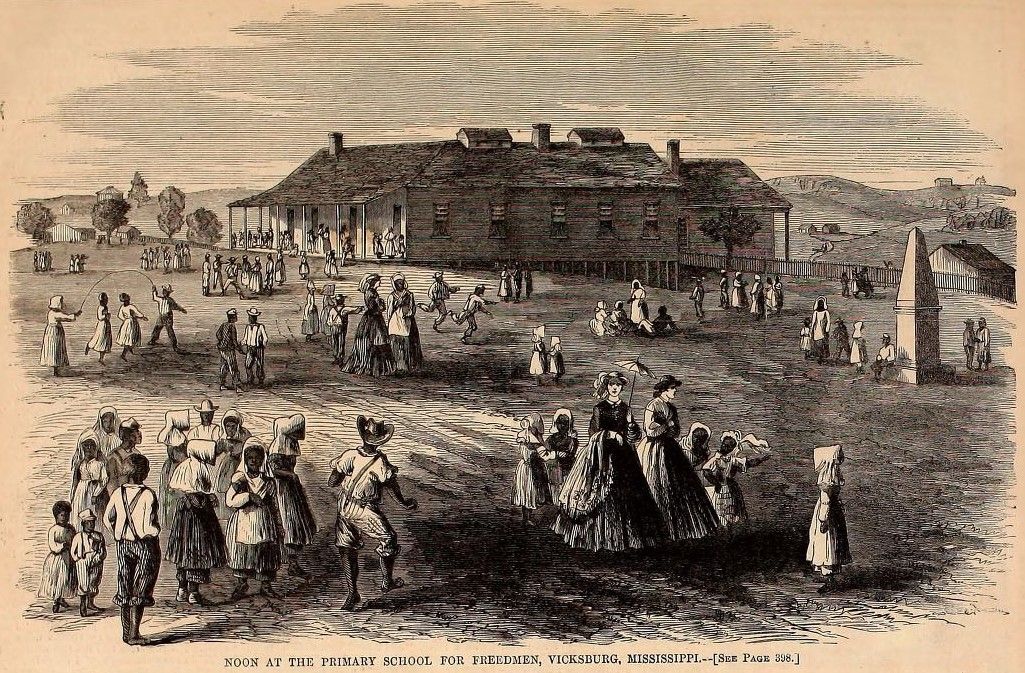
Where the learning happened — and who kept it. Photographs from the CultureTechLens research record — rights-cleared, credited, and cited like everything else here.


Trust & evidence
Evidence before authority. CultureTechLens publishes its methods, its limits, and its corrections alongside its findings. Claims carry grades — VERIFIED, SUPPORTED, PROVISIONAL, DISPUTED, UNRESOLVED — and unknowns are never reported as zero.
Every claim graded. Every source named. Every correction public — see the corrections log.