 CULTURETECHLENS
Kinshasa
VERIFIED evidence grade of this record
CULTURETECHLENS · “Culture, Clearly Seen.” · Black Cultural Intelligence
Research record
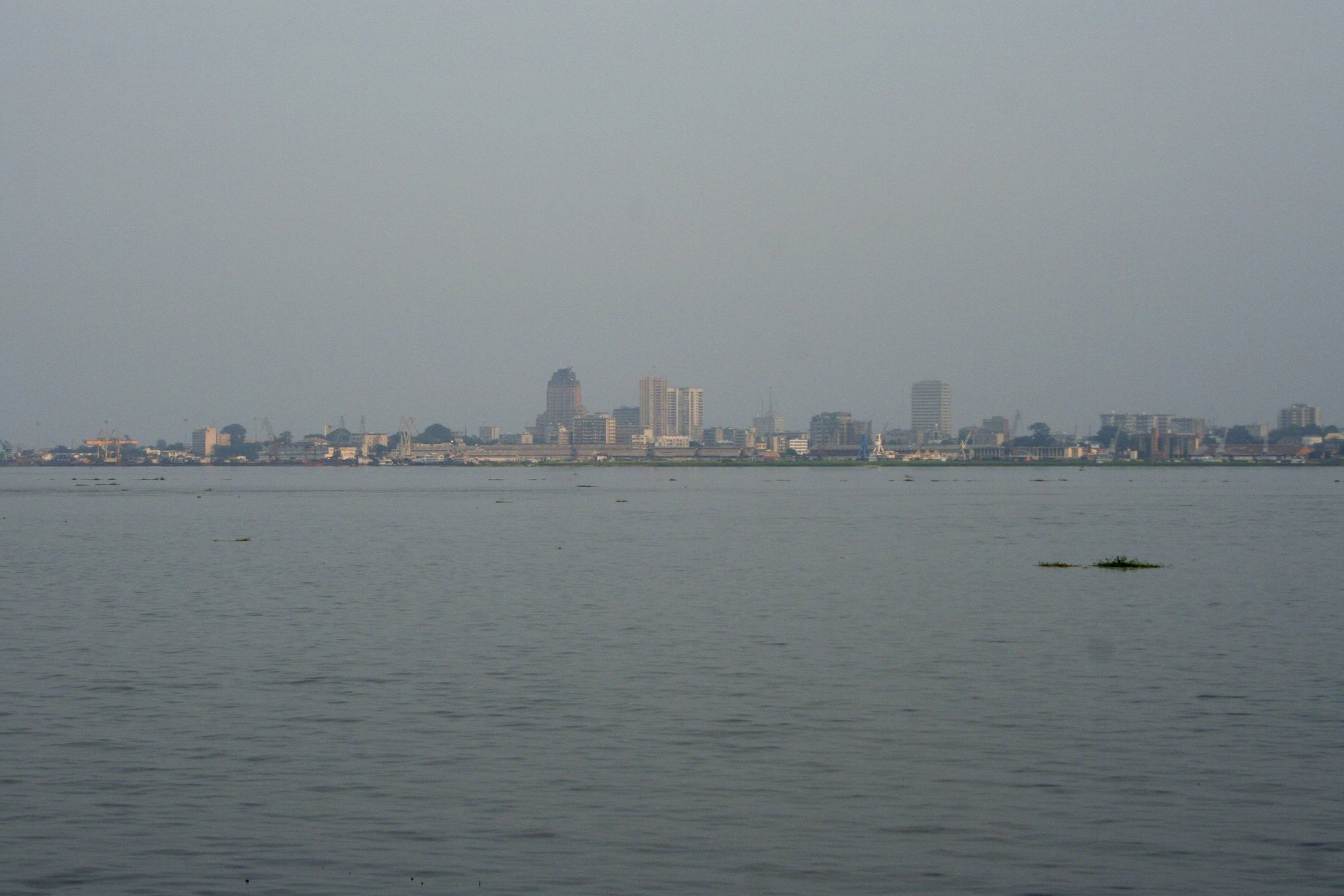
Photograph by Karin Lakeman, CC BY-SA 3.0, via Wikimedia Commons. Source: CultureTechLens
Rights basis: CC BY-SA 3.0
Kinshasa is the capital and largest city of the Democratic Republic of Congo, a sprawling city-province on the southern bank of the Congo River at Pool Malebo, facing Brazzaville, the capital of the Republic of Congo, on the opposite shore. The Reuters report that verifies this graph entry describes it plainly as “Congo's capital” and “a sprawling city on the banks of the mighty Congo river.” It is today counted among the largest urban communities in Africa — a megacity — and the cultural engine of the Congolese world, which is why the graph's diaspora note for the city reads: “Rumba capital; Rumble in the Jungle 1974.”
The modern city began in 1881 as a trading post established by Henry Morton Stanley on behalf of the International Association of the Congo and named Léopoldville, for Stanley's patron King Leopold II of Belgium, who would take the Congo Basin as his personal property. The post flourished as the first navigable port on the Congo River above Livingstone Falls: ocean-going trade had to be portered around the rapids until the Matadi–Kinshasa portage railway was completed in 1898, after which the town's growth accelerated. A royal decree of July 1, 1923, elevated Léopoldville to capital of the Belgian Congo in place of Boma, a transfer completed by the end of the decade. By 1959 the city held more than 300,000 people and was one of the largest urban centers in sub-Saharan Africa, and it was already central to African nationalism in the colony.
In 1960 Léopoldville became the capital of the independent republic. In 1966, under Joseph-Désiré Mobutu's policy of Africanizing names, it was renamed Kinshasa, for a village that once stood near the site. Under Mobutu the city grew rapidly on migration from across the country; Lingala became its lingua franca while French remained the language of administration.
The rumba that UNESCO inscribed is a specific sound, and Kinshasa is its workshop. Congolese rumba grew from the meeting of local dance traditions — its name traces to the Kikongo nkumba, “waist” — with Cuban son records that reached the Congo River ports, and it is defined by cyclical, interlocking guitar lines, an electric bass and percussion floor, the high-energy instrumental bridge called the sebene, and call-and-response singing led over the top. Its emblematic Kinshasa figure is Franco Luambo, whose TPOK Jazz ruled Congolese music for three decades; Tabu Ley Rochereau and, later, Papa Wemba carried the sound forward, and its descendants — soukous and ndombolo among them — spread Congolese guitar music across Africa and the diaspora. When the Rumble in the Jungle came to the Stade du 20 Mai in 1974, it arrived with a festival, Zaire 74, that put James Brown, B.B. King, and Miriam Makeba on the same ground as Franco and Tabu Ley — the city's music presented, for one season, as the sound of the whole Black world.
The cultural claim rests on music. Congolese rumba — a dance music built on cyclical guitar figures, electric bass, and percussion, sung largely in Lingala — first emerged in Léopoldville and Brazzaville in the late 1930s and spread from the two river cities across Africa and its diaspora. UNESCO describes the rumba as music “used for celebration and mourning, in private, public and religious spaces,” and in December 2021 inscribed Congolese rumba, on a joint nomination by the two Congos, on the Representative List of the Intangible Cultural Heritage of Humanity. In October 1974 the city staged the most famous heavyweight fight of the century, the “Rumble in the Jungle,” in which Muhammad Ali defeated George Foreman to regain the world title — the event the graph's note pairs with the rumba. Kinshasa is carried in the graph as a Place at VERIFIED grade.
Sources for this record
- Misery Fuels Frustrations in Congo's Capital (Reuters report) — ReliefWeb (UN OCHA)
Claims supported: Master verification source: Reuters, via ReliefWeb, describes Kinshasa as the Democratic Republic of Congo's capital, “a sprawling city on the banks of the mighty Congo river.” - Kinshasa — Wikipedia
Claims supported: Established as a trading post by Henry Morton Stanley in 1881 and named Léopoldville for King Leopold II; first navigable port on the Congo River above Livingstone Falls; Matadi–Kinshasa railway completed 1898; elevated to capital of the Belgian Congo by the Royal Decree of July 1, 1923, replacing Boma, the transition finalized October 31, 1929; forms a single urban area with Brazzaville across the river at Pool Malebo; counted among Africa's largest urban communities; in 1974 hosted the Rumble in the Jungle, in which Muhammad Ali defeated George Foreman. - History of Kinshasa — Wikipedia
Claims supported: By 1959 Léopoldville's population exceeded 300,000 and it was one of the biggest urban centres in sub-Saharan Africa; the popular music genre of Congolese rumba first emerged in Léopoldville and Brazzaville in this era, and Lingala spread as a lingua franca; renamed Kinshasa in 1966 under Mobutu's Africanization policy, after a nearby village. - Congolese Rumba (element 01711) — UNESCO Intangible Cultural Heritage
Claims supported: Congolese rumba inscribed in 2021 (16th session) on the Representative List of the Intangible Cultural Heritage of Humanity, for the Democratic Republic of the Congo and the Republic of the Congo; a musical genre and dance of the two Congos' urban areas, used for celebration and mourning in private, public, and religious spaces, and passed to younger generations through neighbourhood clubs, training schools, and community organisations. - Congolese Rumba — Wikipedia
Claims supported: Congolese rumba's origins in the late 1930s in the Congos, especially Kinshasa and Brazzaville; its defining elements — cyclical guitar riffs, electric bass and percussion, the sebene bridge, and atalaku; vocals primarily in Lingala; derivative forms soukous and ndombolo; UNESCO inscription in December 2021. - Congolese Rumba: UNESCO Heritage to Global Rhythm — Talented Women Network
Claims supported: Franco Luambo, Tabu Ley Rochereau, and Papa Wemba as the rumba legends of Kinshasa's dance halls in the 1940s and 1950s, when the music became a soundtrack of independence; the genre's later modernizers.
Citations
Wikipedia. “Kinshasa.” Accessed October 25, 2026. https://en.wikipedia.org/wiki/Kinshasa.
Wikipedia. “History of Kinshasa.” Accessed October 25, 2026. https://en.wikipedia.org/wiki/History_of_Kinshasa.
UNESCO. “Congolese Rumba.” Intangible Cultural Heritage, element 01711. Accessed October 25, 2026. https://ich.unesco.org/en/RL/congolese-rumba-01711.
Wikipedia. “Congolese Rumba.” Accessed October 25, 2026. https://en.wikipedia.org/wiki/African_Rumba.
Talented Women Network. “Congolese Rumba: UNESCO Heritage to Global Rhythm.” Accessed October 25, 2026. https://talentedwomennetwork.com/congolese-rumba-unesco-heritage-to-global-rhythm/.
Published October 25, 2026, from the head-verified staged record in the Entity Depth Program (Batches 001–003). Source: CultureTechLens
More place records
Browse the full directory: all entity records
Record CTL-E-5497 · CultureTechLens Knowledge Graph · evidence grade: VERIFIED · 6 sources · first published October 25, 2026, from the head-verified Entity Depth staged record CTL-PL-0066 (canonical master ID — canonical merge pending the founder’s classification sitting).
Directory: all entity records · the knowledge graph
Cite this record
Chicago: CultureTechLens. “Kinshasa (CTL-E-5497).” CultureTechLens Knowledge Graph. Chicago, IL: CultureTechLens, 2026. https://culturetechlens.com/graph/entities/ctl-e-5497/
APA: CultureTechLens. (2026). Kinshasa (CTL-E-5497) [Entity record]. CultureTechLens Knowledge Graph. https://culturetechlens.com/graph/entities/ctl-e-5497/
MLA: CultureTechLens. “Kinshasa (CTL-E-5497).” CultureTechLens Knowledge Graph, 2026, https://culturetechlens.com/graph/entities/ctl-e-5497/
Citation guidance for teachers, journalists, and funders: How to Cite Us.
From the Archive
The archive in pictures
The people, places, and institutions this work documents. Photographs from the CultureTechLens research record — rights-cleared, credited, and cited like everything else here.
Trust & evidence
Evidence before authority. CultureTechLens publishes its methods, its limits, and its corrections alongside its findings. Claims carry grades — VERIFIED, SUPPORTED, PROVISIONAL, DISPUTED, UNRESOLVED — and unknowns are never reported as zero.
Every claim graded. Every source named. Every correction public — see the corrections log.