 CULTURETECHLENS
Chicago Board of Trade Building II
VERIFIED evidence grade of this record
CULTURETECHLENS · “Culture, Clearly Seen.” · Black Cultural Intelligence
Research record
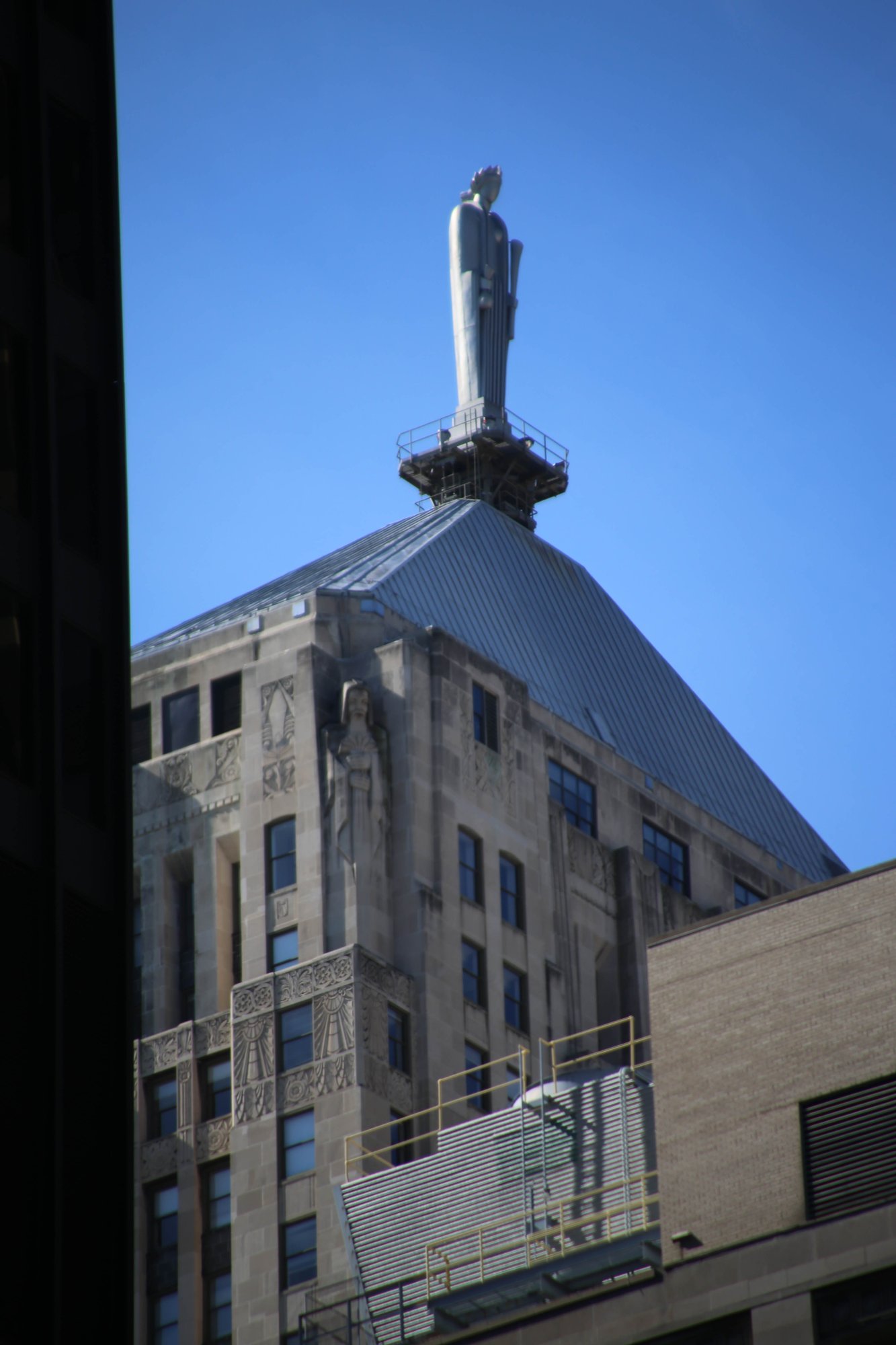
Photograph by Paul Sableman, CC BY 2.0, via Wikimedia Commons. Source: CultureTechLens
Rights basis: CC BY 2.0
The current Chicago Board of Trade Building is the Art Deco tower at 141 West Jackson Boulevard, at the foot of the LaSalle Street canyon in the Loop — and the graph treats it as a separate record from the 1885 Boyington building it replaced, a distinction this entry and its photo pass both preserve. The building's own history, the graph's verification anchor, records that it was commissioned in 1925 to the architects Holabird & Root and officially opened on June 9, 1930, on the site of the 1885 building. It has served as the primary trading venue of the Chicago Board of Trade and, after the 2007 merger of the CBOT and the Chicago Mercantile Exchange, of the CME Group; in 2012 the CME Group sold the building to a consortium of real estate investors including GlenStar Properties and USAA Real Estate.
The tower's dimensions are the first thing every account reaches for, and they carry a small, honest variance. The reference record gives a 44-story, 604-foot (184-meter) skyscraper; the CultureTechLens tallest-buildings chronology and the graph's stored properties give 605 feet, and this program's Batch 001 staged list used 605 — the figure this entry carries, with the 604-foot reference variant flagged in the batch index rather than blended. Either way the reign is agreed: the building was Chicago's tallest from 1930 until 1965, when it was surpassed by the Richard J. Daley Center. The architecture is Indiana limestone in a stepped Art Deco massing, capped by a pyramidal roof and the building's signature: a three-story aluminum statue of Ceres, the Roman goddess of grain, by sculptor John Storrs — famously faceless, a streamlined figure holding a sheaf of wheat and a bag of corn, chosen because the building's business was agricultural futures.
Inside, the working floor was the attraction. The Board of Trade operated on the fourth floor, and the open-outcry trading pit became a sightseeing stop in its own right — during the 1933–34 Century of Progress exposition, visitors took in the Board of Trade's observation views and trading floor as part of the fair-era tour of the modern city. The original 1930s trading floor lasted until 2004. The building's later life has been preservation and adaptation: it was designated a Chicago Landmark in 1977 and a National Historic Landmark and National Register of Historic Places honoree in 1978, and it remains a popular sightseeing attraction and film location.
That public life around the pit is part of the building's documented character. Open outcry — hundreds of traders shouting and signaling bids in the octagonal pits — made the fourth floor one of the few working financial interiors that tourists were deliberately shown, and period guides treated the view down LaSalle and the visit to the floor as a pair: the canyon outside, the market inside. When electronic trading displaced the pits, the floor's 2004 closure ended a 74-year run for the original room, and the building's work shifted fully to offices while its landmark protections, in place since the 1970s, carried the exterior and the Ceres figure forward unchanged.
The connection to this graph's Black Chicago records is geographic and institutional rather than architectural: the Board of Trade stands at the north end of the LaSalle Street corridor, a few miles and a whole economy away from Bronzeville, and the grain and livestock futures traded under Ceres priced the agricultural world that the Great Migration's arrivals had left — and, in the stockyards and rail yards, continued to work in. The graph files the tower as a Place in Chicago's tallest-buildings succession, where its thirty-five years as the city's tallest building is the longest single reign between the Wrigley era and the Daley Center's. Kept distinct from Building I — different architects, different centuries of style, different fates — it is the surviving half of a pair: the 1885 building is a record, the 1930 building is a landmark, and Jackson Boulevard holds both.
Sources for this record
- History — Chicago Board of Trade Building — Chicago Board of Trade Building (cbotbuilding.com)
Claims supported: Master verification source: The current Chicago Board of Trade Building exists as a landmark office building at 141 W. Jackson Blvd, Chicago, on the site of the 1885 building; commissioned in 1925 to architects Holabird & Root and officially opened on June 9, 1930. The source does not cover height, stories or the tallest-building period - Chicago Board of Trade Building — Wikipedia
Claims supported: 44-story, 604-foot (184 m) Art Deco skyscraper at the foot of the LaSalle Street canyon; built in 1930 for the Chicago Board of Trade; primary trading venue of the CBOT and then the CME Group (formed by the 2007 CBOT–CME merger); sold by CME Group in 2012 to a consortium including GlenStar Properties and USAA Real Estate; Chicago's tallest building until 1965, surpassed by the Richard J. Daley Center; three-story aluminum Ceres statue; Chicago Landmark in 1977 and National Historic Landmark / National Register honoree in 1978; popular sightseeing attraction and film location - Chicago Board of Trade Building (What Was the Tallest Building in Chicago in 1933?) — Lindsay Fullerton
Claims supported: 604-foot, 44-floor building in 1933 at LaSalle and Jackson; designed by Holabird & Root, commissioned 1925 and completed 1930; Indiana limestone with a pyramidal copper roof; the faceless Ceres statue by sculptor John Storrs; replaced the 1885 building on the same site; the Board of Trade operated on the 4th floor and the trading pit drew visitors, including during A Century of Progress; the original 1930s trading floor lasted until 2004
Citations
"Chicago Board of Trade Building." Wikipedia. Accessed October 25, 2026. https://en.wikipedia.org/wiki/Chicago_Board_of_Trade_Building.
Fullerton, Lindsay. "Chicago Board of Trade Building." Lindsay Fullerton (blog). Accessed October 25, 2026. http://www.lindsayfullerton.com/blog/tallest-building-in-chicago-1933.
Published October 25, 2026, from the head-verified staged record in the Entity Depth Program (Batches 004–008). Source: CultureTechLens
More place records
Browse the full directory: all entity records
Record CTL-E-5538 · CultureTechLens Knowledge Graph · evidence grade: VERIFIED · 3 sources · first published October 25, 2026, from the head-verified Entity Depth staged record CTL-PL-0191 (canonical master ID — canonical merge pending the founder’s classification sitting).
Directory: all entity records · the knowledge graph
Cite this record
Chicago: CultureTechLens. “Chicago Board of Trade Building II (CTL-E-5538).” CultureTechLens Knowledge Graph. Chicago, IL: CultureTechLens, 2026. https://culturetechlens.com/graph/entities/ctl-e-5538/
APA: CultureTechLens. (2026). Chicago Board of Trade Building II (CTL-E-5538) [Entity record]. CultureTechLens Knowledge Graph. https://culturetechlens.com/graph/entities/ctl-e-5538/
MLA: CultureTechLens. “Chicago Board of Trade Building II (CTL-E-5538).” CultureTechLens Knowledge Graph, 2026, https://culturetechlens.com/graph/entities/ctl-e-5538/
Citation guidance for teachers, journalists, and funders: How to Cite Us.
From the Archive
The archive in pictures
The people, places, and institutions this work documents. Photographs from the CultureTechLens research record — rights-cleared, credited, and cited like everything else here.



Trust & evidence
Evidence before authority. CultureTechLens publishes its methods, its limits, and its corrections alongside its findings. Claims carry grades — VERIFIED, SUPPORTED, PROVISIONAL, DISPUTED, UNRESOLVED — and unknowns are never reported as zero.
Every claim graded. Every source named. Every correction public — see the corrections log.