 CULTURETECHLENS
Morgan Park
VERIFIED evidence grade of this record
CULTURETECHLENS · “Culture, Clearly Seen.” · Black Cultural Intelligence
Research record
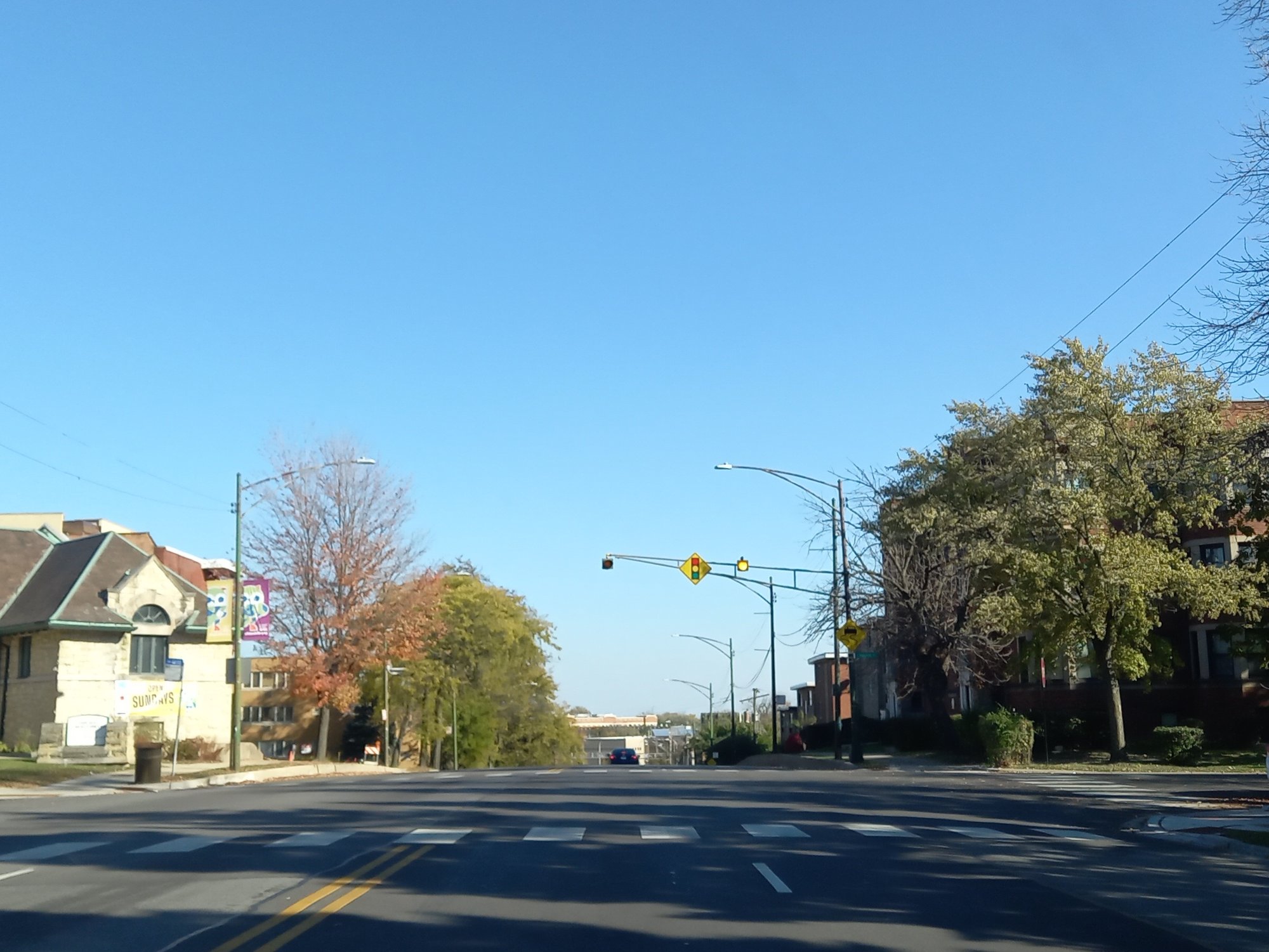
Photograph by AlphaBeta135, CC BY 4.0, via Wikimedia Commons. Source: CultureTechLens
Rights basis: CC BY 4.0
Morgan Park is community area 75, at Chicago's southwestern edge, and the Loyola University Chicago Libraries guide that verifies this record introduces it by its railroads and its name: the community grew around the Rock Island line and took its name from the Morgan family — James Morgan settled and farmed at 111th Street in 1869, in a district of ravines and blue clay known, for its use hiding stolen horses, as 'Horse Thief Hollow.' The name's other claimant in local telling is the developer Thomas Morgan; the guide and the Encyclopedia of Chicago both tie the name to the Morgan family, and this entry follows them.
The village was incorporated in 1882 with Baptist institutional roots and a strict liquor prohibition between Western and Vincennes Avenues that lasted deep into the twentieth century; Morgan Park Academy had arrived, as a military academy, in 1873, and the village was annexed to Chicago in 1914. The Encyclopedia of Chicago's community history supplies the Black record this archive exists to hold: an African American settlement formed at the community's east end — older, smaller, and isolated, first by practice and later by the west leg of Interstate 57 — where African American Catholics founded Holy Name of Mary parish in 1940. Morgan Park is one of Chicago's pioneer African American communities, and simultaneously a historically Irish one: the South Side Irish Parade, founded in 1979 in Morgan Park and Beverly, is billed as the largest neighborhood St. Patrick's Day parade outside Ireland.
Integration, when it came at scale, came through housing policy. The Encyclopedia records that large-scale integration began only in the late 1960s, and that about 400 units of Section 235 federally subsidized housing were built in Morgan Park between 1969 and 1974 — more than in any other Chicago neighborhood — changing the community's composition within a decade. The Beverly Area Planning Association, founded in 1947, worked the seam between Morgan Park and Beverly. By 2013 the community was majority African American; the 2010 census counted about 22,544 residents and the 2015 figure in the reference entry about 22,924.
The civic landmarks in the record are the Walker branch library, renovated and expanded in 1995, and the 2002 Beverly Arts Center campus at 111th and Western, which serves both neighborhoods. The graph carries Morgan Park as a Place at VERIFIED grade, adjacent to Beverly, Mount Greenwood, and Washington Heights in the Far Southwest cluster. Its entry in this archive is the pattern it shares with Kenwood and Oakland, at the other end of the South Side: a community area whose Black history is older than its Black majority — a pioneer Black settlement east of Vincennes holding its ground for a century while the neighborhood around it turned over.
The Encyclopedia's longer entry fills in the community's structure: Morgan Park contains the former settlements of Washington Heights and Morgan Park proper, laid along the Blue Island ridge, and speculators including George Pullman bought land in the area in the 1870s–80s before the 1882 incorporation. The prohibition geography was literal — saloons banned between Western and Vincennes — and the ridge's Longwood Drive mansion strip, shared with Beverly, became a local historic landscape. Institutionally, the neighborhood's anchors accumulated in layers: Morgan Park Academy (1873), the Baptist seminary history behind the community's founding, Morgan Park High School, and the Walker Branch library. The integration chapter is the Encyclopedia's most specific: the Beverly Area Planning Association, founded 1947 by residents of both neighborhoods, worked to manage integration rather than flight, and the Section 235 program's roughly four hundred subsidized homes in 1969–1974 made Morgan Park a test case for federally assisted integration in a white ethnic neighborhood — a history neither the 'pioneer Black settlement' framing nor the Irish-parade framing holds alone, and the reason this Place record carries both.
Sources for this record
- Morgan Park Neighborhood Tour and History Guide — Loyola University Chicago Libraries
Claims supported: Master verification source: community area 75; James Morgan's 1869 settlement at 111th Street and the Rock Island line origins; 'Horse Thief Hollow'/North Blue Island history. - Morgan Park — Encyclopedia of Chicago (Chicago History Museum / Newberry Library)
Claims supported: Village incorporated 1882; Baptist origins and the Western–Vincennes liquor prohibition; annexation to Chicago in 1914; Holy Name of Mary founded 1940 by African American Catholics; the east-of-Vincennes Black settlement isolated by Interstate 57; large-scale integration from the late 1960s; about 400 Section 235 units built 1969–1974, the most of any Chicago neighborhood; Morgan Park Academy (1873); Walker branch renovation (1995) and Beverly Arts Center (2002). - Morgan Park, Chicago — Wikipedia
Claims supported: Population figures (22,544 in 2010; ~22,924 in 2015); majority African American as of 2013; South Side Irish Parade since 1979, billed as the largest neighborhood St. Patrick's Day parade outside Dublin.
Citations
Encyclopedia of Chicago (Chicago History Museum / Newberry Library). “Morgan Park.” Accessed October 25, 2026. http://www.encyclopedia.chicagohistory.org/pages/842.html.
Wikipedia. “Morgan Park, Chicago.” Accessed October 25, 2026. https://en.wikipedia.org/wiki/Morgan_Park,_Chicago.
Published October 25, 2026, from the head-verified staged record in the Entity Depth Program (Batches 004–008). Source: CultureTechLens
More place records
- Aon Center
- Bamako
- Chicago Board of Trade Building I
- Chicago Board of Trade Building II
- Holy Name Cathedral
- Sip & Sonder
Browse the full directory: all entity records
Record CTL-E-5541 · CultureTechLens Knowledge Graph · evidence grade: VERIFIED · 3 sources · first published October 25, 2026, from the head-verified Entity Depth staged record CTL-PL-0170 (canonical master ID — canonical merge pending the founder’s classification sitting).
Directory: all entity records · the knowledge graph
Cite this record
Chicago: CultureTechLens. “Morgan Park (CTL-E-5541).” CultureTechLens Knowledge Graph. Chicago, IL: CultureTechLens, 2026. https://culturetechlens.com/graph/entities/ctl-e-5541/
APA: CultureTechLens. (2026). Morgan Park (CTL-E-5541) [Entity record]. CultureTechLens Knowledge Graph. https://culturetechlens.com/graph/entities/ctl-e-5541/
MLA: CultureTechLens. “Morgan Park (CTL-E-5541).” CultureTechLens Knowledge Graph, 2026, https://culturetechlens.com/graph/entities/ctl-e-5541/
Citation guidance for teachers, journalists, and funders: How to Cite Us.
From the Archive
The archive in pictures
The people, places, and institutions this work documents. Photographs from the CultureTechLens research record — rights-cleared, credited, and cited like everything else here.



Trust & evidence
Evidence before authority. CultureTechLens publishes its methods, its limits, and its corrections alongside its findings. Claims carry grades — VERIFIED, SUPPORTED, PROVISIONAL, DISPUTED, UNRESOLVED — and unknowns are never reported as zero.
Every claim graded. Every source named. Every correction public — see the corrections log.