 CULTURETECHLENS
The Color Purple
VERIFIED evidence grade of this record
CULTURETECHLENS · “Culture, Clearly Seen.” · Black Cultural Intelligence
Research record
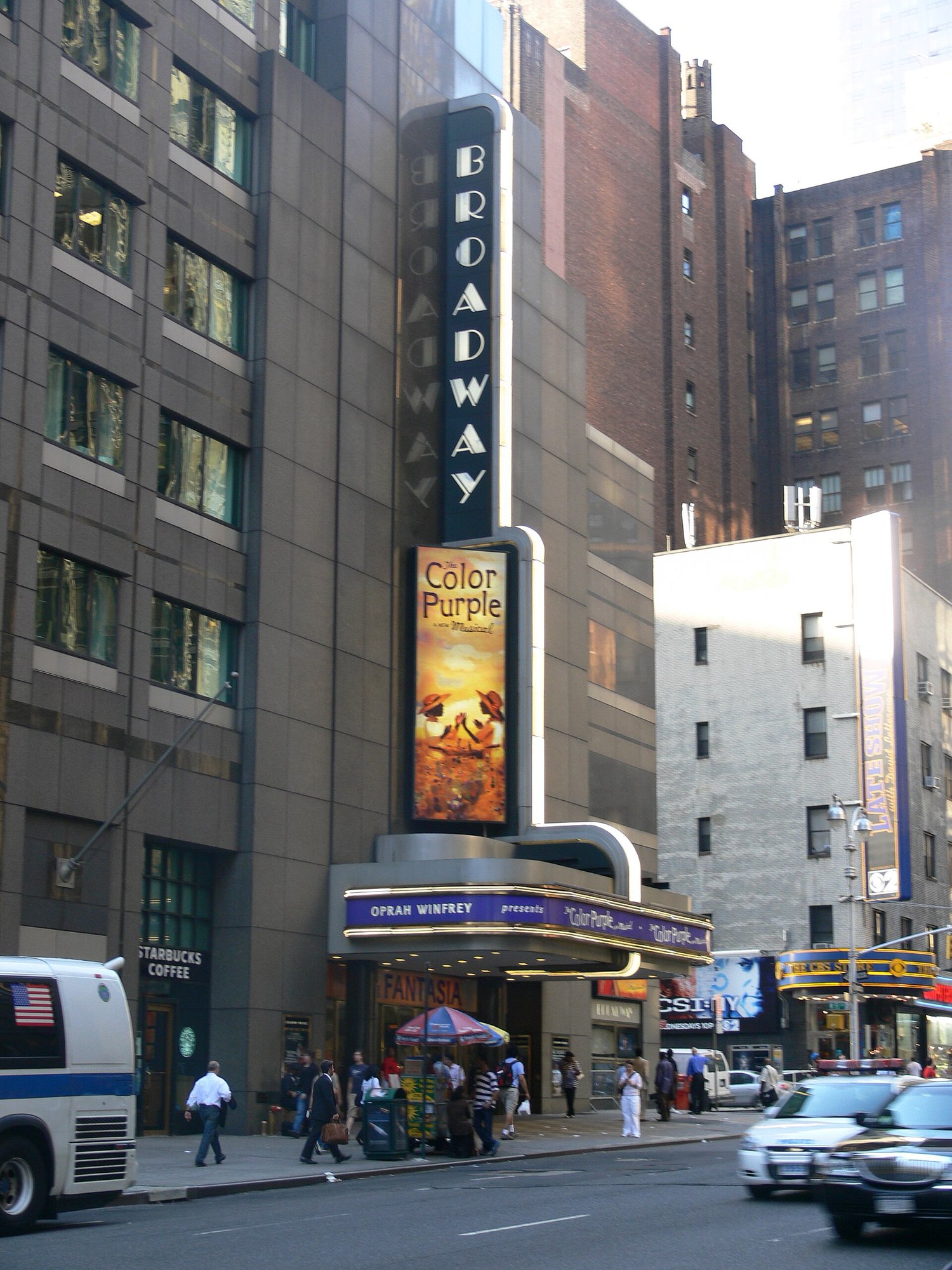
Photo: Andreas Praefcke, CC BY 3.0, via Wikimedia Commons · Source: CultureTechLens
Rights basis: CC BY 3.0 (https://creativecommons.org/licenses/by/3.0) — attribution as recorded in Wikimedia Commons machine-readable license metadata
The Color Purple is a 1982 novel by American author Alice Walker, recorded in the CultureTechLens graph as a work of fiction authored by Walker and first published in 1982. Penguin Random House, which publishes a current edition of the book, describes it as a powerful cultural touchstone of modern American literature that depicts the lives of African American women in early twentieth-century rural Georgia. That setting and period are central to the novel's identity: its story is rooted in the rural South and in the experiences of Black women whose lives are shaped by family, faith, work, violence, and endurance across decades.
The novel is written in epistolary form. Penguin Random House describes it as unfolding through a series of letters spanning nearly thirty years, first from Celie to God, then from the sisters to each other. The central sisters are Celie and Nettie, who are separated as girls and who sustain their loyalty to and hope in each other across time, distance, and silence, in the publisher's summary. Celie, whose full name in the graph is Celie Harris Johnson, is the principal letter writer and the character through whose voice much of the novel is heard. The graph connects the novel to Celie, to its author Alice Walker, and to Shug Avery, Albert Johnson, Sofia, Harpo Johnson, and Squeak, the figures who populate Celie's world in the book and in its later adaptations.
Penguin Random House characterizes the novel as breaking the silence around domestic and sexual abuse, and as carrying readers on a journey toward transformation, redemption, and love. The New York Public Library, in its exhibition record for the novel, identifies its major concerns as racism, sexism, gender roles, and the soft power of friendship, themes that people of all backgrounds continue to confront. Taken together, those documented descriptions define the prose at a level the sources support: this is a novel about Black women in the early twentieth-century South, about pain and struggle as well as companionship and growth, resilience and bravery, in the publisher's words. The letters are not a decorative device. They are the structure by which Celie first addresses God and by which the separated sisters later address each other, so that voice, writing, and survival are linked in the form of the book itself.
The Color Purple received the highest American literary honors in the year after its publication. The Pulitzer Prizes record Alice Walker as the 1983 winner in Fiction for The Color Purple, published by Harcourt Brace. Penguin Random House's author page likewise notes that Walker won the Pulitzer Prize in Fiction in 1983 and the National Book Award. The New York Public Library states the point precisely: after winning the 1983 National Book Award for Fiction and the 1983 Pulitzer Prize for Fiction, Walker became the first Black American woman to receive the Pulitzer Prize for Fiction. That double recognition in 1983 established the novel's place in American letters within a year of publication and remains the factual center of its reputation.
The same library record documents a second, continuing history. The New York Public Library notes that Walker's 1982 novel has been repeatedly challenged and banned across the country since its original publication, and that it continues to be targeted for censorship, citing a permanent removal from schools in Clay County, Florida, in January 2024 as a recent example. The novel's canonical standing and its contested standing therefore coexist in the documented record, and both are part of why the book remains taught, discussed, and defended by public libraries.
The novel's legacy is also a legacy of adaptation, which this entry treats as legacy rather than as the entity itself. Three years after publication, the book was adapted as a 1985 feature film directed by Steven Spielberg, starring Whoopi Goldberg as Celie, with Oprah Winfrey and Danny Glover also in the cast. Playbill's record notes that Goldberg was Oscar-nominated for creating the role of Celie in that film, for which Menno Meyjes wrote the screenplay. A stage musical followed. Playbill records that the original Broadway production of The Color Purple opened on December 1, 2005, at the Broadway Theatre and ran through February 24, 2008, with LaChanze in the role of Celie, produced by Oprah Winfrey and based on Walker's novel. The musical was revived on Broadway in 2015 in a staging starring Cynthia Erivo as Celie, Jennifer Hudson as Shug Avery, and Danielle Brooks as Sofia; that revival won the Tony Award for Best Revival of a Musical, and Erivo won the Tony Award for Best Actress. A second feature film, a musical adaptation directed by Blitz Bazawule from a screenplay by Marcus Gardley, based on the stage musical and in turn on Walker's 1982 novel, was released by Warner Bros. Pictures in the United States on December 25, 2023, with Fantasia Barrino as Celie, Taraji P. Henson as Shug Avery, Danielle Brooks as Sofia, Colman Domingo as Mister, Corey Hawkins as Harpo, and H.E.R. as Squeak, and with Winfrey, Quincy Jones, Scott Sanders, and Spielberg as producers.
For CultureTechLens, The Color Purple is a foundational Black literary work whose graph connections — to Walker as author and to Celie, Shug Avery, Albert Johnson, Sofia, Harpo Johnson, and Squeak as its featured figures — map a novel that moved from a 1982 publication in rural Georgia's fictional world to the Pulitzer and National Book Award record in 1983, and then to film, Broadway, revival, and film again across four decades, without losing its documented core of sisterhood, healing, forgiveness, and self-discovery.
Sources for this record
- The Color Purple (Movie Tie-In) by Alice Walker — Penguin Random House
Claims supported: Novel by Alice Walker; depicts African American women in early-twentieth-century rural Georgia; sisters Celie and Nettie separated as girls; series of letters spanning nearly thirty years, first from Celie to God, then sisters to each other; breaks silence around domestic and sexual abuse; journey toward transformation, redemption and love; Walker won Pulitzer Prize in Fiction in 1983 and the National Book Award - Alice Walker — Winners in Fiction, 1983 — The Pulitzer Prizes
Claims supported: The Color Purple by Alice Walker (Harcourt Brace) won the 1983 Pulitzer Prize for Fiction - The Color Purple by Alice Walker, 1982 — The New York Public Library
Claims supported: 1982 novel; won 1983 National Book Award for Fiction and 1983 Pulitzer Prize for Fiction, making Walker the first Black American woman to receive the latter; repeatedly challenged and banned since publication, including permanent removal in Clay County, Florida in January 2024; themes of racism, sexism, gender roles and friendship - Look Back at the Original Broadway Production of The Color Purple — Playbill
Claims supported: Original Broadway musical ran December 1, 2005 through February 24, 2008 at the Broadway Theatre, based on Walker's novel, produced by Oprah Winfrey, LaChanze as Celie; 2015 revival starred Cynthia Erivo, Jennifer Hudson and Danielle Brooks and won Tony for Best Revival of a Musical, Erivo won Best Actress - Fantasia Barrino and Danielle Brooks to Lead The Color Purple Movie Musical — Playbill
Claims supported: 2023 Warner Bros. film directed by Blitz Bazawule, screenplay by Marcus Gardley adapted from the stage musical and Walker novel, producers Winfrey, Quincy Jones, Scott Sanders and Spielberg; cast including Taraji P. Henson as Shug Avery, Corey Hawkins as Harpo, H.E.R. as Squeak, Colman Domingo as Mister; Whoopi Goldberg was Oscar-nominated for creating Celie in the 1985 film, screenplay by Menno Meyjes; LaChanze originated Celie in 2005 Broadway premiere - The Color Purple: Timeless Classic Returns to Broadway — The Fordham Observer
Claims supported: 1985 film adaptation directed by Steven Spielberg stars Whoopi Goldberg as protagonist, with Oprah Winfrey and Danny Glover
Citations
The Pulitzer Prizes. "Alice Walker." The Pulitzer Prizes. Accessed October 25, 2026. https://www.pulitzer.org/winners/alice-walker.
The New York Public Library. "The Color Purple by Alice Walker, 1982." The New York Public Library. Accessed October 25, 2026. https://www.nypl.org/events/exhibitions/galleries/literature-and-film/item/17547.
Playbill. "Look Back at the Original Broadway Production of The Color Purple." Playbill. Accessed October 25, 2026. https://playbill.com/article/look-back-at-the-original-broadway-production-of-the-color-purple.
Playbill. "Fantasia Barrino and Danielle Brooks to Lead The Color Purple Movie Musical." Playbill. Accessed October 25, 2026. https://playbill.com/article/fantasia-barrino-and-danielle-brooks-to-lead-the-color-purple-movie-musical.
The Fordham Observer. "'The Color Purple': Timeless Classic Returns to Broadway." The Fordham Observer. Accessed October 25, 2026. https://fordhamobserver.com/27778/recent/arts-and-culture/the-color-purple-timeless-classic-returns-to-broadway/.
Published October 25, 2026, from the head-verified staged record in the Entity Depth Program (Batches 001–003). Source: CultureTechLens
More work records
Browse the full directory: all entity records
Record CTL-E-5529 · CultureTechLens Knowledge Graph · evidence grade: VERIFIED · 6 sources · first published October 25, 2026, from the head-verified Entity Depth staged record CTL-W-0172 (canonical master ID — canonical merge pending the founder’s classification sitting).
Directory: all entity records · the knowledge graph
Cite this record
Chicago: CultureTechLens. “The Color Purple (CTL-E-5529).” CultureTechLens Knowledge Graph. Chicago, IL: CultureTechLens, 2026. https://culturetechlens.com/graph/entities/ctl-e-5529/
APA: CultureTechLens. (2026). The Color Purple (CTL-E-5529) [Entity record]. CultureTechLens Knowledge Graph. https://culturetechlens.com/graph/entities/ctl-e-5529/
MLA: CultureTechLens. “The Color Purple (CTL-E-5529).” CultureTechLens Knowledge Graph, 2026, https://culturetechlens.com/graph/entities/ctl-e-5529/
Citation guidance for teachers, journalists, and funders: How to Cite Us.
From the Archive
The archive in pictures
The people, places, and institutions this work documents. Photographs from the CultureTechLens research record — rights-cleared, credited, and cited like everything else here.



Trust & evidence
Evidence before authority. CultureTechLens publishes its methods, its limits, and its corrections alongside its findings. Claims carry grades — VERIFIED, SUPPORTED, PROVISIONAL, DISPUTED, UNRESOLVED — and unknowns are never reported as zero.
Every claim graded. Every source named. Every correction public — see the corrections log.